OEM Soccer Ball Manufacturing Process for Custom Branding and Private Label Buyers
In today’s competitive sports industry, importers, wholesalers, retailers, sports academies, and private label brands are searching for reliable partners who can deliver high-quality soccer balls at competitive prices. Whether you are sourcing for the USA, Canada, UK, Brazil, Mexico, Italy, Spain, Chile, Czechia, South America, or Gulf Countries, choosing the right manufacturing partner can directly impact your brand reputation and business growth.
The global soccer ball industry has evolved into a highly technical manufacturing sector, integrating material science, precision engineering and strict quality assurance protocols. Whether for professional tournaments or recreational use, a high-quality soccer ball must meet rigorous standards in durability, consistency and performance.
This article provides a comprehensive overview of the soccer ball manufacturing process, while also introducing a leading soccer ball manufacturer—SpoGen PVT Ltd—as a practical example of how modern factories implement these standards at scale.
Table of Contents
Core Materials Used in Soccer Ball Production
The selection of raw materials directly determines the ball’s performance characteristics.
Outer Cover (Casing)
- PU (Polyurethane): Soft touch, high elasticity and excellent control—ideal for match balls
- PVC (Polyvinyl Chloride): More durable and cost-efficient—commonly used for training balls
Inner Lining
Multiple layers of polyester or cotton fabric are laminated beneath the outer cover to:
- Maintain spherical shape
- Improve rebound consistency
- Enhance structural strength
High-end soccer balls typically use 3–5 lining layers.
Bladder
- Latex bladder: Better responsiveness but faster air loss
- Butyl bladder: Superior air retention and durability
Panel Design and Cutting in Soccer Ball Production
Traditional soccer balls use a 32-panel structure (20 hexagons and 12 pentagons), although modern designs may reduce panel count for improved aerodynamics.
Cutting Methods
- Die-cutting: Efficient for mass production
- Laser cutting: Higher precision for premium balls
Accurate panel cutting is essential for achieving a perfectly spherical shape.
Stitching Techniques in Soccer Ball Production
Hand-stitched soccer ball
• 630–750 stitches per ball
• Stronger seams and better durability
• Preferred for professional-grade products
• Machine-Stitched soccer ball
• Faster and more cost-effective
• Suitable for mid-range and promotional balls
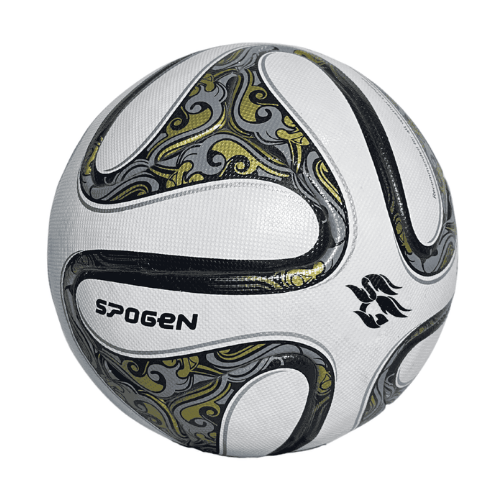
Thermally Bonded soccer ball
• Seamless construction using heat and adhesive
• Reduced water absorption
• Enhanced flight stability
Assembly and Bladder Insertion in Soccer Ball Production
After stitching or bonding:
- The ball is inverted so seams are internal
- The bladder is inserted
- The valve is sealed securely
- Initial inflation is performed
This stage ensures structural integrity and internal balance.
Inflation and Calibration in Soccer Ball Production
Each ball is inflated within regulated pressure ranges (typically 8.5–15.6 PSI). Manufacturers verify:
- Circumference accuracy
- Weight compliance (410–450g)
- Roundness consistency
Quality Control and Testing in Soccer Ball Production
Strict quality control ensures product reliability and compliance with international standards throughout the Soccer Ball manufacturing Process, helping manufacturers maintain consistent durability, performance, shape retention, and safety for bulk buyers, importers and global sports brands.
Key Tests Include:
- Weight Test
- Circumference Test
- Rebound Test
- Water Absorption Test
- Air Pressure Retention Test
- Durability (kicking simulation) Test
These tests are critical for certifications such as FIFA Quality.
Soccer Ball Branding and Customization
Final processes include
Logo printing
Surface texturing
OEM/ODM customization
Packaging
Manufacturer Spotlight-SpoGen PVT LTD
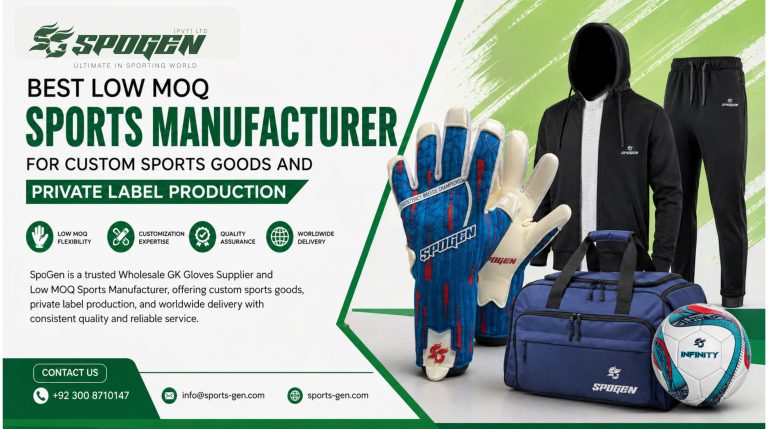
SpoGen PVT LTD is a modern, export-oriented sports goods manufacturer based in Sialkot, Pakistan — a globally recognized hub for premium sports equipment manufacturing. The company specializes in OEM soccer balls, goalkeeper gloves, sportswear, sports bags and private label sports products for international brands, wholesalers, distributors, academies and retailers. With extensive expertise in the Soccer Ball Manufacturing Process, SpoGen focuses on producing high-quality, durable and custom-branded soccer balls that meet international performance and export standards for global B2B buyers.
Located in Sialkot’s well-established sports manufacturing region, SpoGen benefits from strong industrial infrastructure, skilled craftsmanship and reliable international export logistics. The company supports worldwide shipping and bulk order fulfillment for buyers across the USA, Canada, UK, Europe, South America and Gulf countries.
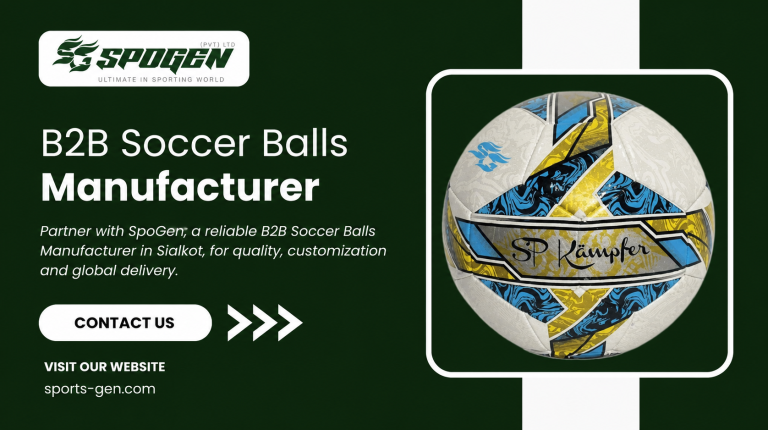
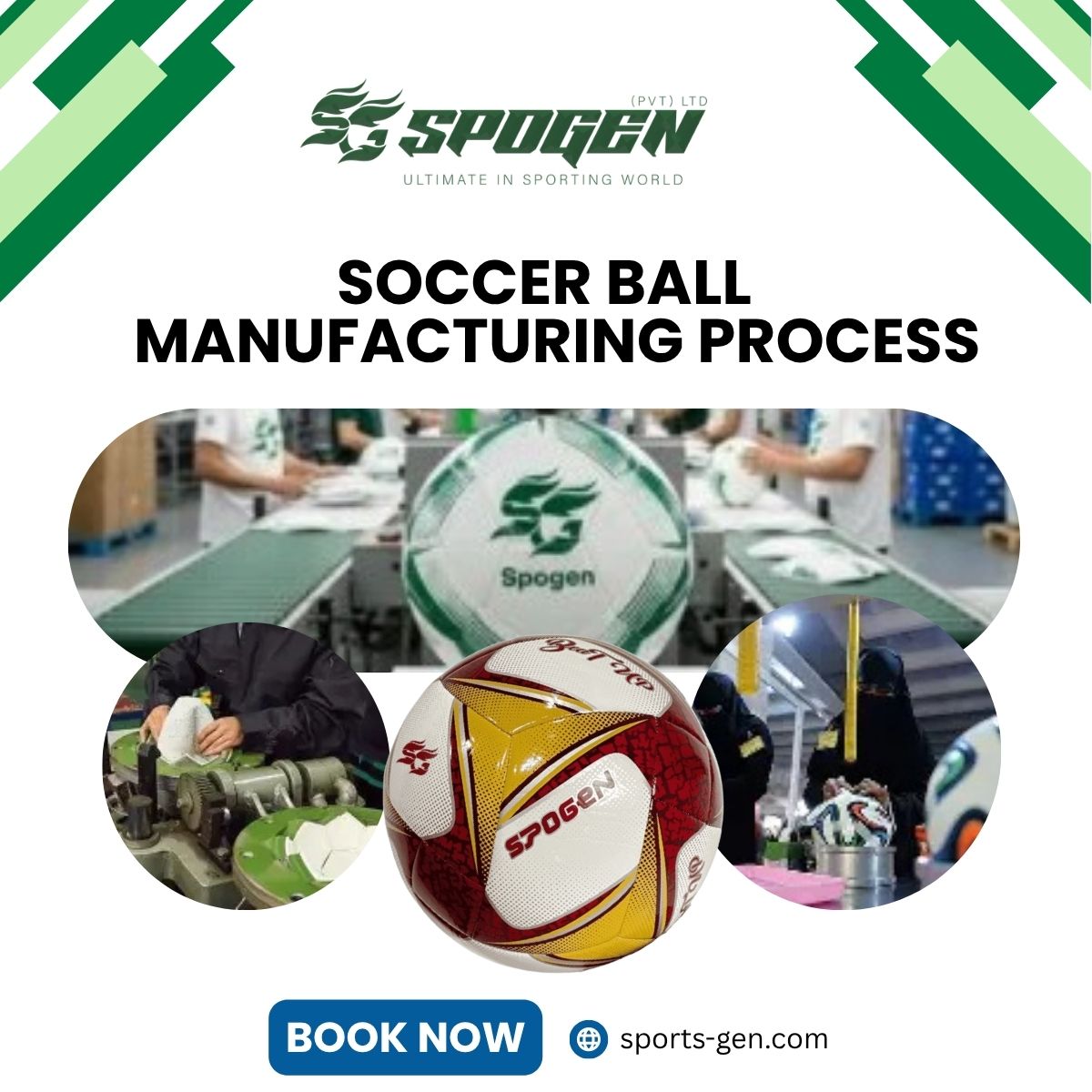
As a trusted OEM Soccer Balls manufacturer, SpoGen follows an advanced Soccer Ball Manufacturing Process focused on producing high-quality match balls, training balls, thermo-bonded footballs and hand-stitched soccer balls under strict quality control systems. The company combines modern production technology with experienced craftsmanship throughout the Soccer Ball Manufacturing Process to ensure excellent durability, strong shape retention, reliable air retention and professional-level performance for global sports brands, wholesalers, importers and private label buyers.
Key Strengths of SpoGen PVT LTD
| Feature | Details |
|---|---|
| Manufacturing Expertise | OEM & Private Label Sports Manufacturing |
| Main Products | Soccer Balls, Goalkeeper Gloves, Sportswear, Bags |
| Production Capabilities | Bulk Orders & Custom Branding |
| Customization | Logo Printing, Packaging, Panel Design |
| Export Markets | USA, UK, Canada, Europe, Gulf Countries |
| Quality Focus | Strict Inspection & Performance Testing |
| MOQ Support | Flexible MOQ for Growing Brands |
| Shipping | Worldwide Export Support |
Key Strengths
- Production Scale:
Covers an area of 67,000 square meters with 316 workers, achieving an annual output of over 5 million sports balls - Advanced Manufacturing
Equipped with world-class production techniques and continuously adopting advanced technologies - R&D and Design
Supported by experienced designers and a professional management team, focusing on innovation, color matching and modern aesthetics - Quality Philosophy
Emphasizes “excellent quality and reasonable price,” with strict raw material selection and detail-oriented production - Global Market Reach
Products are exported to Asia, Europe and South America, earning recognition from athletes, sports enthusiasts, and industry professionals
Corporate Mission & Vision
- Mission:
To enable more people to enjoy the joy of sports and promote a healthier lifestyle - Core Values:
Health, excellence and innovation - Vision:
To become a leading global sports service provider
FAQs-Soccer Ball Manufacturing Process
For bulk buyers and importers, the Soccer Ball Manufacturing Process ensures consistent quality, durability, and performance across large orders, helping reduce returns, improve customer satisfaction, and protect brand reputation.
Common materials include PU, PVC or TPU for the outer cover, polyester or cotton fabric for reinforcement and latex or butyl bladders for air retention and bounce control.
The main stages include material selection, panel cutting, printing, lamination, stitching or thermal bonding, bladder insertion, inflation testing, quality inspection and packaging for export.
A soccer ball is designed using geometry, air pressure and material science. The panel shape, bladder type and stitching affect aerodynamics, bounce and control. Manufacturers like SpoGen PVT LTD optimize these factors for professional performance.
Yes, buyers can customize logos, colors, panel designs, packaging and branding during the Soccer Ball Manufacturing Process, especially when working with OEM manufacturers.
Hand-stitched balls offer higher durability and premium quality, while machine-stitched balls are faster to produce and more cost-effective for bulk wholesale orders.
Most soccer balls are manufactured in countries like Pakistan, China, and India due to strong textile industries and skilled labor. A leading B2B manufacturer like SpoGen PVT LTD produces OEM and private label soccer balls for global markets including the USA, UK, Canada, Europe and Gulf countries.
Soccer balls are made by cutting panels, printing designs, stitching or bonding them, inserting a bladder, inflating and testing quality. B2B manufacturers like SpoGen PVT LTD handle large-scale OEM production for wholesalers and sports brands.
Conclusion
The soccer ball manufacturing process is a complex system that integrates material selection, precision engineering and strict quality control. From PU outer covers to thermally bonded panels, every component contributes to the final performance.
Manufacturers like SpoGen Sports demonstrate how scalability, innovation and quality management can be combined to meet global demand while maintaining competitive pricing and high standards. For buyers, distributors and private-label brands, understanding these processes is essential for selecting the right supplier and ensuring long-term product success.
Contact Us today to discuss your OEM requirements and get customized soccer ball solutions for your brand with SpoGen Sports Factory.