Sports Industry Trends 2026: What B2B Buyers and Brands Need to Know?
These sports industry trends are reshaping how brands source, buy, and sell sports goods in 2026. From smart technology to sustainable materials, buyers who understand these shifts can make smarter sourcing decisions and stay ahead of competitors.
At SpoGen, we see these sports industry trends firsthand through daily conversations with importers, wholesalers, and private label brands. This guide breaks down what is changing and what it means for your business.
Table of Contents
Smart Technology Is Now a Baseline Expectation
Smart features are no longer reserved for premium products only. Sensors, data tracking, and connected technology are becoming standard across many sports goods categories, from footwear to training gear. Buyers increasingly expect performance data built into the products they source, not just added as an afterthought.
For manufacturers, this means investing in flexible production lines that can handle both traditional and tech-enabled product lines side by side.
Sustainability Has Moved From Buzzword to Buying Requirement
Sustainability used to be a marketing angle. Now it is closer to a market entry requirement. Recycled materials, biodegradable fabrics, and greener manufacturing processes are showing up across footwear, apparel, and equipment categories.
Buyers are asking harder questions about where materials come from and how factories manage waste and emissions. Manufacturers who can answer these questions clearly, with documentation, have an advantage in supplier selection.
Supply Chains Are Shifting Toward Diversified Sourcing
Rising material costs and shifting trade policies are pushing brands to rethink where they manufacture. Many are diversifying across multiple production regions instead of relying on a single country or factory. This spreads risk and protects against sudden cost or policy changes.
Supply chain transparency has become a deciding factor when brands choose a manufacturing partner. Buyers want to know a factory can adapt quickly if conditions change mid-order.
Low MOQ and Private Label Manufacturing Are Reshaping B2B Buying
Smaller, more flexible order quantities are letting brands test new products without committing to large inventory. This trend supports the fast growth of private label and small, focused sports brands, which are gaining market share by targeting specific niches instead of trying to compete broadly.
For B2B buyers, this means it is easier than ever to launch a private label product line, test the market, and scale up only once demand is proven.
The 2026 FIFA World Cup Is Driving a Football Product Surge
With the FIFA World Cup being hosted across the United States, Canada, and Mexico in 2026, demand for footballs, apparel, and fan merchandise is rising sharply. Brands connected to football gear are seeing this as a major opportunity, and many are working to secure reliable manufacturing capacity well ahead of peak demand.
This is a strong window for football-focused product lines, but it also means manufacturers with available capacity and fast turnaround will be in higher demand.
Certifications and Compliance Are Becoming Non-Negotiable
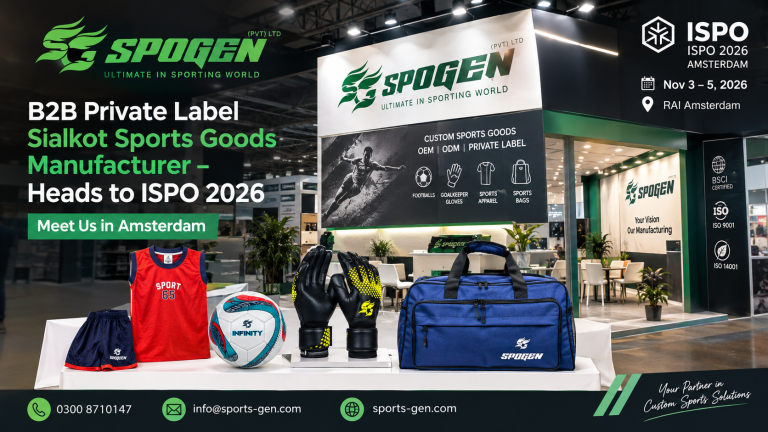
Buyers are placing more weight on verified certifications before they commit to a manufacturing partner. Certifications like BSCI, ISO 9001, and ISO 14001 confirm a factory follows recognized standards for social compliance, quality management, and environmental responsibility.
This shift reflects growing buyer concern about ethical manufacturing and long-term supplier reliability, not just upfront pricing.
What These Sports Industry Trends Mean for B2B Buyers
Taken together, these sports industry trends point toward one clear direction: buyers want flexibility, transparency, and proof. They want manufacturers who can move quickly, document their processes, and adapt to shifting demand without compromising quality.
Brands that partner with certified, transparent, and flexible manufacturers will be better positioned to respond to these changes throughout 2026 and beyond.
Conclusion
These sports industry trends show an industry moving toward smarter products, greener materials, and more flexible sourcing. B2B buyers who stay informed on these shifts can make better decisions about who they partner with and how they grow their product lines.
Understanding these sports industry trends today helps brands avoid disruption tomorrow, whether that means diversifying suppliers, adopting sustainable materials, or preparing for demand spikes like the 2026 World Cup.
At SpoGen, we help brands navigate these sports industry trends with certified, flexible, and transparent manufacturing support.
Frequently Asked Questions
What are the biggest sports industry trends in 2026?
The biggest sports industry trends in 2026 include smart and sensor-based gear, sustainable materials, diversified and nearshore sourcing, low MOQ private label manufacturing, and rising demand tied to the 2026 FIFA World Cup.
Why is sustainability a major sports industry trend right now?
Sustainability has moved from a nice-to-have to a market entry requirement. Buyers now expect recyclable materials, greener manufacturing processes, and transparent supply chains before they place an order.
How is the 2026 FIFA World Cup affecting sports goods manufacturing?
The 2026 FIFA World Cup, hosted across the United States, Canada, and Mexico, is driving higher demand for footballs, apparel, and fan gear, pushing many brands to secure reliable manufacturing partners ahead of peak demand.
Why are B2B buyers choosing low MOQ manufacturing partners?
Low MOQ manufacturing lets brands test new products and private label lines without committing to large inventory. This reduces financial risk while still allowing brands to respond quickly to changing demand.
What should B2B buyers look for in a sports goods manufacturer in 2026?
Buyers should look for verified certifications such as BSCI, ISO 9001, and ISO 14001, transparent supply chains, flexible MOQ options, and manufacturers who can adapt quickly to shifting trade and sourcing conditions.
Conclusion
These sports industry trends make one thing clear: the market is rewarding brands that move fast, source responsibly, and back up their claims with proof. Smart technology, sustainable materials, and flexible supply chains are no longer optional extras. They are becoming the standard buyers expect.
Staying ahead of these sports industry trends means choosing manufacturing partners who are certified, transparent, and ready to adapt as conditions shift. Whether you are preparing for World Cup demand, testing a new private label line, or switching to greener materials, the brands that plan around these sports industry trends today will be the ones still growing in 2027 and beyond.
At SpoGen, we help brands turn these sports industry trends into real, reliable production plans, backed by certified manufacturing and hands-on experience. Contact our team to talk through your product plans for 2026.