After ISPO 2026: How Sports Product Development Turns Ideas into a 2027 Collection
A practical guide to sports product development, OEM manufacturing, product sampling, quality control and production planning for sports brands.
Quick answer: Turning a sports product idea into a 2027 collection takes seven steps. Write a clear product brief. Choose a manufacturing model (OEM, ODM or private label). Turn the idea into a technical specification. Approve samples before bulk production. Agree costs and minimum order quantities in writing. Set quality checks. Plan production and shipping backwards from your launch date.
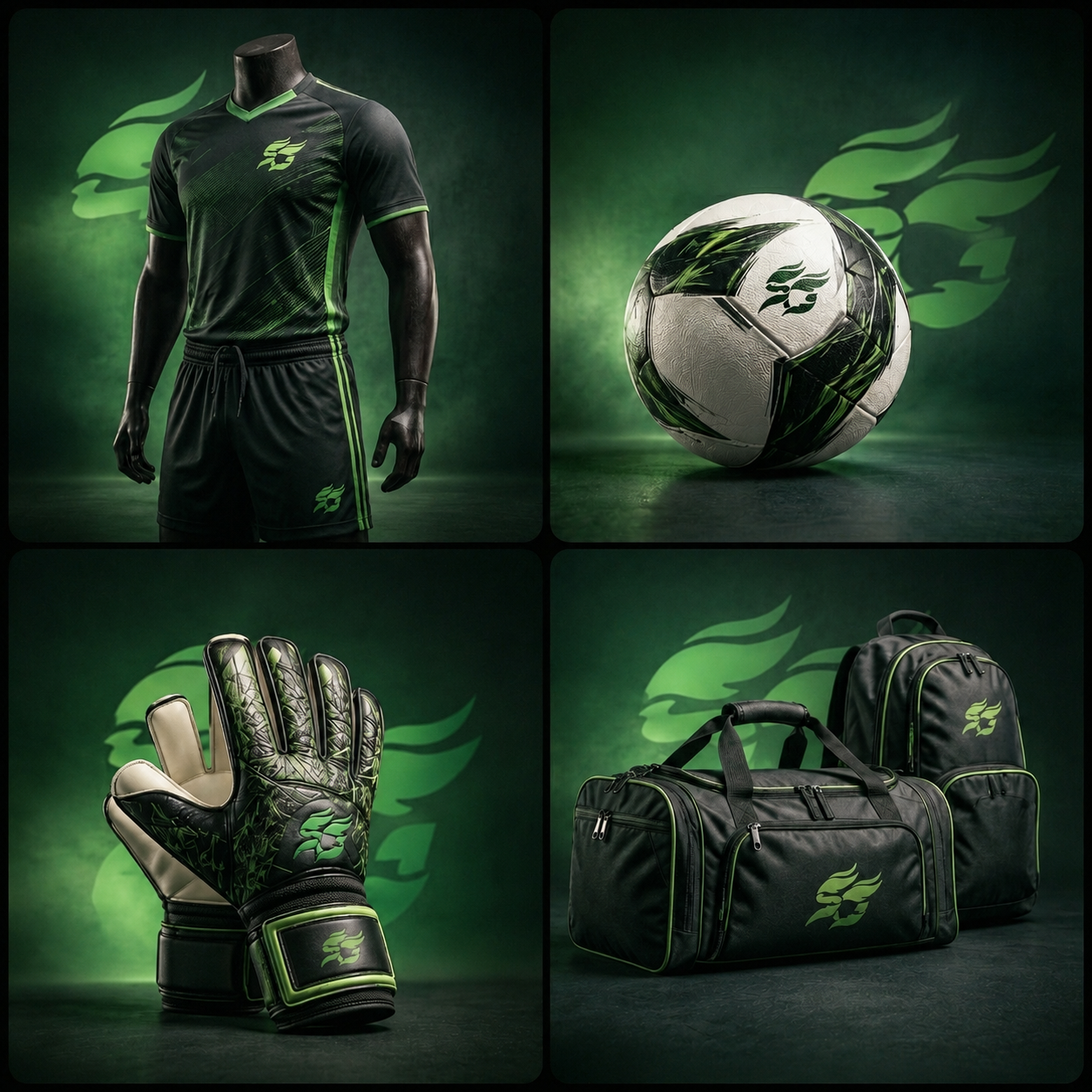
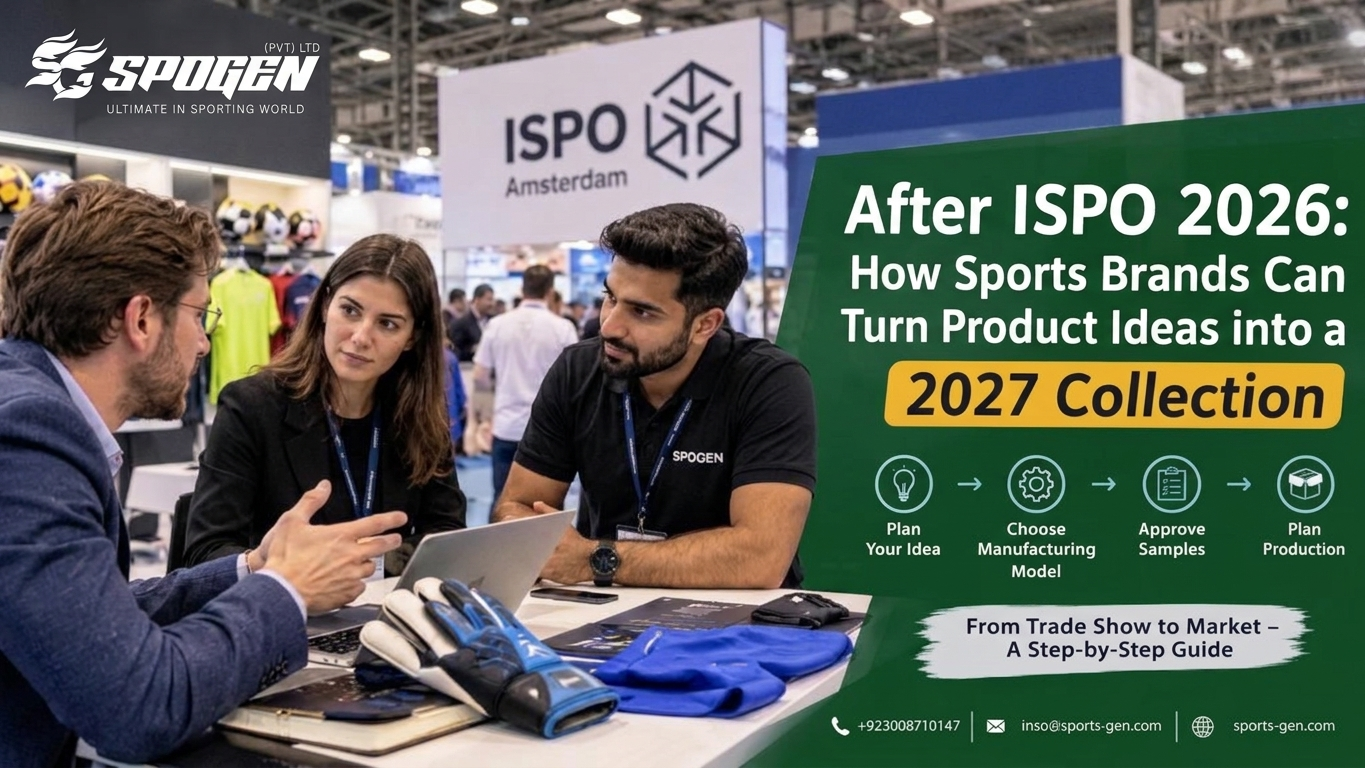
ISPO 2026 took place at RAI Amsterdam from 3 to 5 November, the first time the show was held there. Spogen exhibited in Hall 5, Booth 5B41, with goalkeeper gloves, a new sports bags collection and custom teamwear. We have already shared what we showed in our ISPO 2026 recap. This guide covers something different: what happens after the show, when an idea has to become a real product.
A trade show is where many product conversations begin. It is not where products are made. The steps below apply whether your idea started on an exhibition floor, in a designer’s sketchbook or in a retailer’s sales report. They are written for sports brands, importers, private-label businesses, clubs, academies, teamwear businesses and sourcing teams, including those planning a first collection.
Table of Contents
Why Sports Product Development Begins After a Trade Show?
A trade show starts conversations. Product development starts when those conversations become written requirements.
On a show floor you can handle materials, check stitching and hear how a supplier answers technical questions. What you cannot settle in a stand conversation is a measurement, a palm material, a zip type or an exact colour. Those details have to be written down, made into a sample and approved.
Three habits help in the weeks after a show:
- Sort your ideas: Decide which products are realistic for the 2027 season and which belong to a later collection.
- Write notes while conversations are fresh: Record what each supplier said about materials, customisation, samples and quantities.
- Send the same brief to every supplier you shortlist: Then you can compare answers fairly.
At SpoGen, a project begins when a buyer shares an idea, a logo or a product brief. A conversation at our booth is a good introduction. The written requirement is what lets our team quote, sample and plan.
Start with a Clear Sports Product Brief
A product brief is a short document that tells a manufacturer what you want to make, who it is for and roughly how many you expect to order. The clearer it is, the more useful the first reply will be.
Sports Product Development Checklist
| Requirement | Information to prepare | Why it matters |
|---|---|---|
| Product category | The product you want to develop, for example goalkeeper gloves, a duffel bag or a team kit | Decides which processes and materials apply |
| Design | Sketches, reference images or existing samples | Shows the look you expect |
| Materials | Preferred materials and construction | Affects cost, feel and durability |
| Branding | Logo files, colours, labels and packaging | Defines print, embroidery and label work |
| Quantity | Expected order quantity, and a possible repeat order | Influences pricing and minimum order terms |
| Target market | Where and to whom the product will be sold | Shapes sizing, labelling and presentation |
| Sampling | Number of samples and how you will approve them | Sets expectations for revisions |
| Timeline | Expected launch and delivery dates | Lets production be planned backwards |
Three mistakes are common. References such as “like brand X, but better” give a factory nothing to measure. Brands leave out a quantity range because they are unsure, when a range is enough. And the delivery date is shared too late, after sampling time has already been used.
If you only have an idea, that is acceptable. A manufacturer can help organise the details, and that is where the choice of manufacturing model begins.
Check labelling and product-safety requirements in the countries where you plan to sell. Your manufacturer can follow your requirements, but confirming the rules for your own market is a task for you or your compliance adviser.
Choose the Right Manufacturing Model: OEM, ODM or Private Label
OEM means the manufacturer produces a product to your design and specification. ODM means the manufacturer provides the design or development base and you select and adapt it. Private label means you sell a product made by a manufacturer under your own brand, often from an existing design with your branding added. In practice the lines overlap and suppliers use the terms differently, so always ask what is included.
OEM vs ODM vs Private Label
| Model | Who creates the design | Buyer involvement | Often suits | Confirm before you start |
|---|---|---|---|---|
| OEM | The buyer supplies the design or technical specification | High: you define and approve details | Brands with a design team or a signature product | Ownership of design files and any tooling; number of sample revisions |
| ODM | The manufacturer provides a development base; the buyer adapts it | Medium: you choose options and give feedback | Brands without an in-house design team, or those wanting a faster start | How much can be customised; whether the design is exclusive to you |
| Private label | An existing or standard product, with your branding | Lower on design, high on brand presentation | Retailers, clubs and new brands testing a market | What can change (colours, materials, logo method) and whether others can buy the same base product |
ODM and private label are the two most often confused. The practical question is who controls the specification and whether the product is exclusive to you. Many brands start with private label or ODM to test demand, then move to OEM as their range and design confidence grow.
Spogen works under all three models. For OEM we make to your design, for ODM we help develop a product from an idea or an existing design, and for private label your brand goes on a product we make.
Turn Your Product Idea into Technical Specifications
A technical specification turns “a goalkeeper glove with good grip” into details a factory can build and you can check. It usually covers reference visuals, measurements, materials, components, construction, performance requirements, branding and packaging.
The detail changes by product:
- Goalkeeper gloves: size range, cut style, palm material and thickness, backhand material, closure, finger construction and logo method.
- Sports bags: external dimensions and capacity, fabric type and weight, zips, strap padding, base reinforcement, compartment layout and logo placement.
- Apparel and teamwear: fabric composition and weight, size chart, fit, graphic method (such as sublimation or embroidery), labels and colour references.
Add performance requirements in plain words: what the product must do, in which conditions and how you will check it. “Must hold its shape after repeated use” is vague. “The strap anchor seam must not open when the bag is loaded to the agreed weight” can be inspected.
Once sampling begins, avoid changing the main decisions such as fabric or construction. A major change can mean starting the sample again. If you do not have a specification, a manufacturer can help you build one from your brief, images or a reference product.
Why Product Sampling Matters Before Bulk Production?
A sample lets you judge the real product before the full order exists. It is the cheapest point in the project to find a problem.
Sampling usually runs in stages:
- First sample or prototype: shows whether the design and materials work as imagined.
- Revisions: you send feedback, the manufacturer corrects it and makes a new sample if needed.
- Final or pre-production sample: the version you approve in writing. Bulk production is then measured against it.
- Shipment check (optional): some buyers ask for photos or a sample from finished goods, before dispatch.
Sample timing and cost depend on the product, the materials and the number of revisions. Ask for both for your specific product. Spogen makes samples as well as bulk orders and sample details are confirmed with each buyer.
Checklist: What to Evaluate Before Approving a Product Sample
- ☐ Dimensions: measured against the specification, within an agreed tolerance.
- ☐ Materials: correct materials, thickness, colour and feel.
- ☐ Construction: straight, even stitching; no loose threads; stress points such as straps, zip ends and seams look secure.
- ☐ Fit and comfort: for gloves and apparel, try the correct sizes; for bags, carry them loaded.
- ☐ Function: zips run smoothly, closures hold and the product performs as your brief describes.
- ☐ Branding: logo position, size, colour and print or embroidery quality; labels are correct.
- ☐ Finishing: clean edges, no glue marks, no visible faults.
- ☐ Packaging: polybags, hangtags, labels and cartons match your instructions.
- ☐ Match to specification: compare against the written brief and earlier revision notes.
Give feedback in one organised list with photographs, not in scattered messages. Clear feedback usually reduces the number of rounds.
How to Evaluate a Sports Goods Manufacturer?
The best manufacturer for your project is the one that can meet your specification, quality expectations and schedule at a total cost you can accept. The lowest quotation does not always achieve this.
The American Society for Quality (ASQ) describes supplier selection in similar terms. Its supplier quality guidance lists past experience with the product, the maturity of the supplier’s quality system, capacity against the delivery schedule, technical support and the total cost of working with the supplier as common criteria. It also suggests judging samples through prototyping or testing.
Manufacturer Evaluation Criteria
| Criterion | What to ask | Why it matters |
|---|---|---|
| Relevant product experience | Which similar products have you made? | Category experience lowers development risk |
| Manufacturing capabilities | Which steps are done in your own facility, including logo and print methods? | Control of cutting, printing, stitching and finishing affects consistency |
| Quality management | What is checked, at which stage? Which certificates do you hold? | A documented process is easier to review than a promise |
| Material knowledge | Can you advise on alternatives and availability? | Good advice prevents costly changes after sampling |
| Sampling | How many rounds, how long and at what cost? | Sets the shape of the development phase |
| Capacity and planning | How will you schedule my order? | Shows whether your dates are realistic |
| Communication | Who is my contact and how quickly do you reply? | Poor communication is a common source of delay |
| Compliance documents | Which audit and certificate copies can I see? | Check scope and validity, not just the badge |
| Shipping | Who prepares export documents and packing? | Avoids surprises at the final step |
| Total project cost | What is included beyond the unit price? | Sample, packaging, freight and rework all count |
When you compare quotations, send each supplier the same brief and ask what each price includes. Two prices for different specifications are not comparable. A factory’s own information also helps see SpoGen’s manufacturing unit page.
Understand MOQ, Pricing and Production Planning
MOQ and pricing depend on the product, not on a universal rule. Any figure should be confirmed with the manufacturer in writing for your exact specification.
| Factor | How it can affect cost or MOQ |
|---|---|
| Product complexity | More parts and steps usually mean more labour and time |
| Materials | Specialist materials may have their own purchase minimums |
| Design customisation | Custom patterns and colourways need more set-up than standard options |
| Branding | Print, embroidery, embossing and label methods differ in effort |
| Packaging | Custom packaging adds cost and lead time |
| Order quantity | Set-up effort is spread over more units in larger orders |
| Sampling | Development work is part of the project cost |
| Production requirements | Extra inspection or testing adds steps |
| Shipping | Mode, destination and packing all affect the total |
Plan the timeline backwards. Start with the date you need products in your warehouse. Subtract shipping, then production, then sample approval, then the revision rounds, then the first sample. Ask the manufacturer for time estimates by stage rather than one overall number, and allow room for a second sample round.
SpoGen describes its MOQ for goalkeeper gloves as flexible, with details confirmed for each project. Our shipping and delivery page has more on delivery.
Establish Quality Expectations Before Bulk Production
Write quality expectations down before bulk production starts. Three documents do most of the work: the agreed specification, the approved sample and an inspection plan.
Ask these questions:
- What is checked when materials arrive, during production and before packing?
- How is consistency controlled across a batch? Is the approved sample the reference?
- What tolerance is acceptable for size, colour and print position?
- What happens if a defect is found and who pays for correction?
- Can I see inspection records or arrange a third-party inspection before shipment?
- How are cartons packed and checked before dispatch?
Certificates support this discussion but do not replace it. A quality-system certificate shows that a management system exists. It does not confirm that your specific product meets your specification. Spogen’s website shows its BSCI, ISO 9001 and ISO 14001 certificates and Spogen describes quality checks during production and a final check before shipping. As with any supplier, confirm the scope and validity of every certificate yourself.
Prepare Your Sports Collection for 2027
Plan a collection as a sequence of decisions, not a single deadline. Each stage should end with something you can approve.
| Stage | What happens | What you decide |
|---|---|---|
| 1. Define | Choose products, priorities and target market | Which products belong in the 2027 range |
| 2. Brief and shortlist | Write the brief and send it to selected manufacturers | Which suppliers to sample with |
| 3. Specify and sample | Convert the brief into a specification; first samples are made | Whether the design and materials work |
| 4. Revise and approve | Feedback rounds, then final sample approval | Which sample becomes the reference |
| 5. Branding and packaging | Confirm logos, labels and packaging | Final presentation |
| 6. Production | Schedule bulk production with agreed inspections | Order quantities and delivery dates |
| 7. Shipping and launch | Pack, ship and prepare for sale | Delivery route and launch date |
Treat products separately where needed. Gloves, bags and teamwear use different materials and steps, so each may need its own schedule. A smaller first range, perhaps one lead product and a few variants, is often easier to control than launching many products at once.
Working with a Direct Sports Goods Manufacturer in Sialkot, Pakistan
Spogen (Pvt) Ltd is a B2B sports goods manufacturer based in Sialkot, Pakistan. We work directly from our factory with sports brands, importers, distributors, retailers, clubs, academies, teamwear businesses and private-label buyers, offering OEM, ODM and private-label manufacturing. We serve buyers in the UK, USA, Canada, Europe, the Gulf countries, China and South America.
Our product categories are:
Working directly with the factory means your sample feedback reaches the people who make the product. A typical project with us starts with your idea, logo or product brief. We then make samples, you approve the design and quality, and bulk production follows with quality checks, packing and shipping. Sample details, MOQ and timing are confirmed with each buyer because they depend on the product.
Frequently Asked Questions
They define the products and target market, write a product brief, choose a manufacturing model, approve samples, then plan production and delivery backwards from the launch date. Developing one lead product first, then adding variants, is often easier to manage than launching a full range at once.
Share the product category, design references, preferred materials, branding details, expected quantity, target market, sample requirements and timeline. A quantity range and a delivery date are especially helpful. If you do not have a full specification, send images or a reference product and the manufacturer can help organise the rest.
A sample shows the real product before the full order is made. It lets you check size, materials, stitching, branding and finish and fix problems when they are cheapest to correct. Once approved in writing, it becomes the reference for bulk production.
Compare relevant product experience, manufacturing capabilities, quality processes, sampling arrangements, capacity, communication, compliance documents and shipping support. Send every supplier the same brief and compare total project cost, not only unit price. Verify the scope and validity of any certificate you are shown.
Product complexity, materials, design customisation, branding methods, packaging, order quantity, sampling, production requirements and shipping all play a part. There is no universal MOQ or price, so ask the manufacturer to confirm terms in writing for your exact specification.
Send your product requirement through our website: product type, references or logo, materials, branding, quantity range, target market and timeline. Our team reviews it and discusses options. We make samples before bulk orders, and sample details, MOQ and timing are confirmed with each buyer.
Final Thoughts
A product idea becomes a collection through a series of clear decisions: a written brief, a suitable manufacturing model, a specification, an approved sample, agreed costs, quality checks and a schedule built backwards from launch. None of these steps is complicated alone. Problems usually appear when one is skipped.
If you are planning a 2027 range in gloves, bags or teamwear, start by writing down your requirement. Even a rough brief is enough to begin a useful conversation with a manufacturer. Get a free B2B quote to Build Your Product Requirement and our team will reply with next steps.