How Can US Brands Find Sports Goods Suppliers at ISPO 2026?
US brands can find sports goods suppliers at ISPO 2026 by starting with the official ISPO exhibitor information, filtering suppliers by product or manufacturing category, shortlisting companies that match their needs, verifying each supplier’s capabilities and certifications and arranging meetings before or during the event. The goal is not just to walk the show floor. It is to leave with a short, verified list of manufacturers worth ordering samples from.
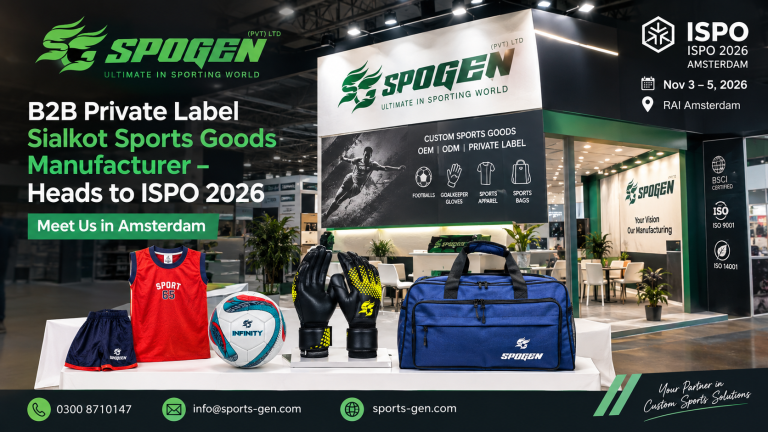
ISPO 2026 runs November 3–5, 2026, at RAI Amsterdam in the Netherlands. November 3 is the ISPO Leaders’ Summit, a conference day. November 4–5 are the expo days, when the exhibition floor is open.
This guide is written for US-based sports brands, soccer brands, private-label businesses, importers, wholesalers, distributors, retailers and sports academies or clubs who want a practical way to find and evaluate a sports goods supplier around ISPO 2026.
Why ISPO 2026 Matters for US Sports Brands?
ISPO brings sports and outdoor manufacturers, brands and buyers into one place at the same time. For a US brand, that means fewer emails and more face-to-face conversations in a short window.
A trade show like ISPO 2026 is useful for three main reasons:
- You can compare suppliers side by side: Instead of researching one factory at a time online, you can talk to several manufacturers in the same product category within a few days.
- You can see and touch samples: Photos on a website do not always show stitching quality, material weight or finish. In person, you can.
- You can start a relationship before you commit: A short meeting tells you a lot about how a supplier communicates, which matters once you are placing repeat orders.
That said, a trade show is only the starting point. The real work happens before you arrive (research and shortlisting) and after you leave (sampling and vetting). The next section covers both.
How to Find Sports Goods Suppliers at ISPO 2026?
Finding the right sports goods manufacturer at ISPO 2026 is a process, not a single search. Here is a step-by-step way to approach it.
1. Start with the official ISPO exhibitor information: Once ISPO publishes its exhibitor directory, use it as your primary source. Official show information is more reliable than third-party “exhibitor list” sites, which are often outdated or incomplete.
2. Search by relevant product or category: Narrow your search to your actual product need goalkeeper gloves, soccer balls, sports apparel, sports bags, team uniforms or another category. A broad search wastes time; a category-specific search gets you to relevant manufacturers faster.
3. Shortlist manufacturers and suppliers: Build a shortlist of 8–15 companies to research further. At this stage, you are collecting candidates, not making decisions.
4. Check whether the company actually manufactures what you need: Some exhibitors are factories. Others are trading companies or agents who resell factory-made goods. Neither is automatically wrong, but you should know which one you are talking to, since it affects pricing, communication and quality control.
5. Review OEM, ODM and private-label capabilities: If you need custom products under your own brand, confirm the supplier actually offers this. Not every manufacturer supports private label or custom development at every order size.
6. Check certifications and business information: Look for certifications relevant to your market and product, such as BSCI (social compliance) or ISO 9001 (quality management). Ask for the company’s registration details and export history.
7. Review product evidence and manufacturing experience: Ask for photos or videos of the factory floor, sample products or past production runs. A manufacturer with real production experience should be able to show this without difficulty.
8. Contact suppliers before the show: Email your shortlisted suppliers ahead of ISPO 2026 to confirm they will be exhibiting and to request a meeting slot. Many manufacturers offer pre-show scheduling, and this avoids wasted trips across a large venue.
9. Prepare questions and specifications: Have your product requirements, target quantities and key questions written down before you arrive. This keeps meetings focused and comparable.
10. Arrange meetings: Book fixed meeting times where possible, rather than relying on walk-ins. A scheduled meeting is more likely to involve the right person from the supplier’s team.
11. Compare suppliers after the meeting: Do not decide on-site. Take notes during each meeting, then compare suppliers once the show is over, when you can think clearly and check facts.
What Should US Brands Check Before Choosing an ISPO 2026 Supplier?
Use this table as a working checklist while you evaluate suppliers.
| Supplier Factor | What to Check | Why It Matters |
|---|---|---|
| Manufacturing capability | Whether the company owns or runs its own factory or works through subcontractors | Confirms whether you are dealing with a manufacturer or a middleman |
| Product quality | Materials, stitching, finishing and overall build of sample products | Directly affects your product’s durability and your brand’s reputation |
| Customization | Ability to change colors, materials, sizing, logos and design details | Needed for any private-label or branded product |
| OEM / ODM | Whether the supplier builds to your design (OEM) or offers its own developed designs you can adapt (ODM) | Determines how much product development work falls on your team |
| Private label | Whether the supplier can produce and package under your brand name | Required if you are building your own product line, not reselling an existing one |
| MOQ (minimum order quantity) | The minimum quantity required per style or product | Affects your upfront investment and inventory planning |
| Sampling | Sample turnaround time, revision process and how sample costs are handled | Lets you test real product quality before committing to a bulk order |
| Production lead time | Time from deposit or purchase order to finished goods | Impacts your launch date and future reorder planning |
| Quality control | In-house inspection process and how defects are handled | Reduces the risk of receiving faulty or inconsistent goods |
| Certifications | Relevant certificates such as BSCI or ISO 9001 | Confirms the supplier meets recognized compliance and quality standards |
| Packaging | Custom packaging, labeling, and barcoding options | Needed if you plan to sell retail-ready product |
| Communication | Response time, English proficiency, and a clear point of contact | Affects how smoothly the whole relationship runs, order after order |
| Shipping / export capability | Experience with export paperwork, Incoterms and freight forwarders | Reduces the risk of delays or errors once goods are ready to ship |
| After-sales communication | Support and responsiveness after delivery, including how disputes are handled | Protects your business after the order has already shipped |
This checklist is a starting point. Your own weighting will depend on whether you need a one-time bulk order or a long-term private-label partner.
Questions US Buyers Should Ask Sports Goods Suppliers at ISPO 2026
Generic small talk will not tell you much about a supplier. Ask specific, sourcing-focused questions instead.
Factory and manufacturer status
Do you own and operate your own factory or do you work with subcontractors?
Where is your factory located and can it be visited or audited?
What product categories do you manufacture in-house?
Customization and materials
Can you produce custom colors, materials and sizing for this product?
What materials do you currently use and can they be substituted?
Can you match an existing sample or technical spec sheet?
MOQ and samples
What is your minimum order quantity for this product?
Can I order a sample before committing to a bulk order?
What is your typical sample turnaround time?
Production and quality control
What is your standard production lead time after a deposit is paid?
How do you handle quality control during and after production?
What happens if a batch does not meet agreed quality standards?
Certifications and compliance
What certifications does your factory currently hold?
Can you provide certificate copies or audit reports on request?
Packaging and branding
Can you produce custom packaging, labels and barcodes?
Can products be branded under my company name (private label)?
OEM/ODM and repeat orders
Do you offer OEM manufacturing, ODM development or both?
How do you handle repeat orders and any product revisions between orders?
Write down each answer during your ISPO meetings. You will need this detail later, when you compare suppliers.
Compare Sports Goods Suppliers After ISPO 2026
Once the show is over, resist the urge to decide based on which meeting felt the most friendly. Compare suppliers using the same criteria for each one.
A simple way to do this:
- Build a comparison sheet using the supplier factors from the table above.
- Score each supplier on the same scale for each factor.
- Request identical product specs and quantities when asking for quotes, so pricing is genuinely comparable.
- Ask for samples from your top 2–3 suppliers before making a final decision.
- Weigh capability and communication as heavily as price. A cheaper quote is not a good deal if quality control is weak or communication is slow.
We are not able to name or rank specific competing suppliers here, since that requires verified, supplier-specific evidence. Base your final decision on your own research, samples and direct conversations.
What Sports Products Can Buyers Discuss with Spogen?
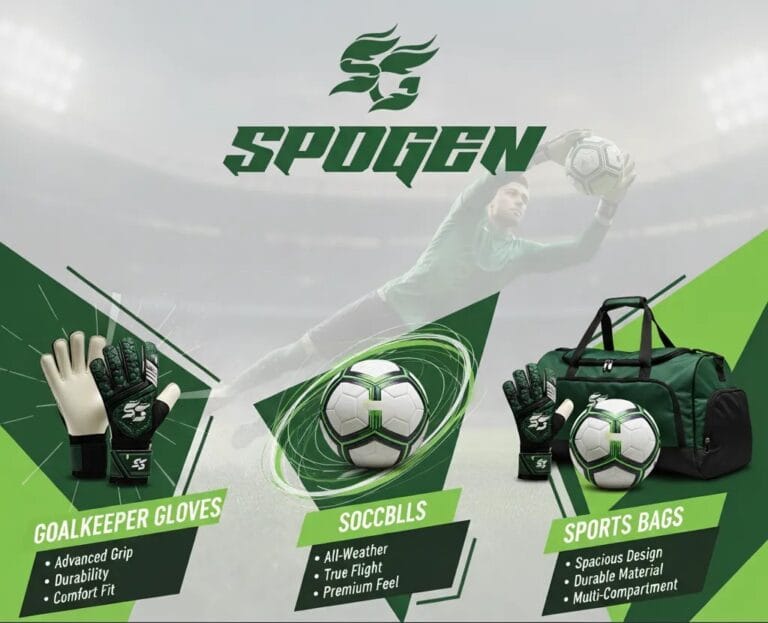
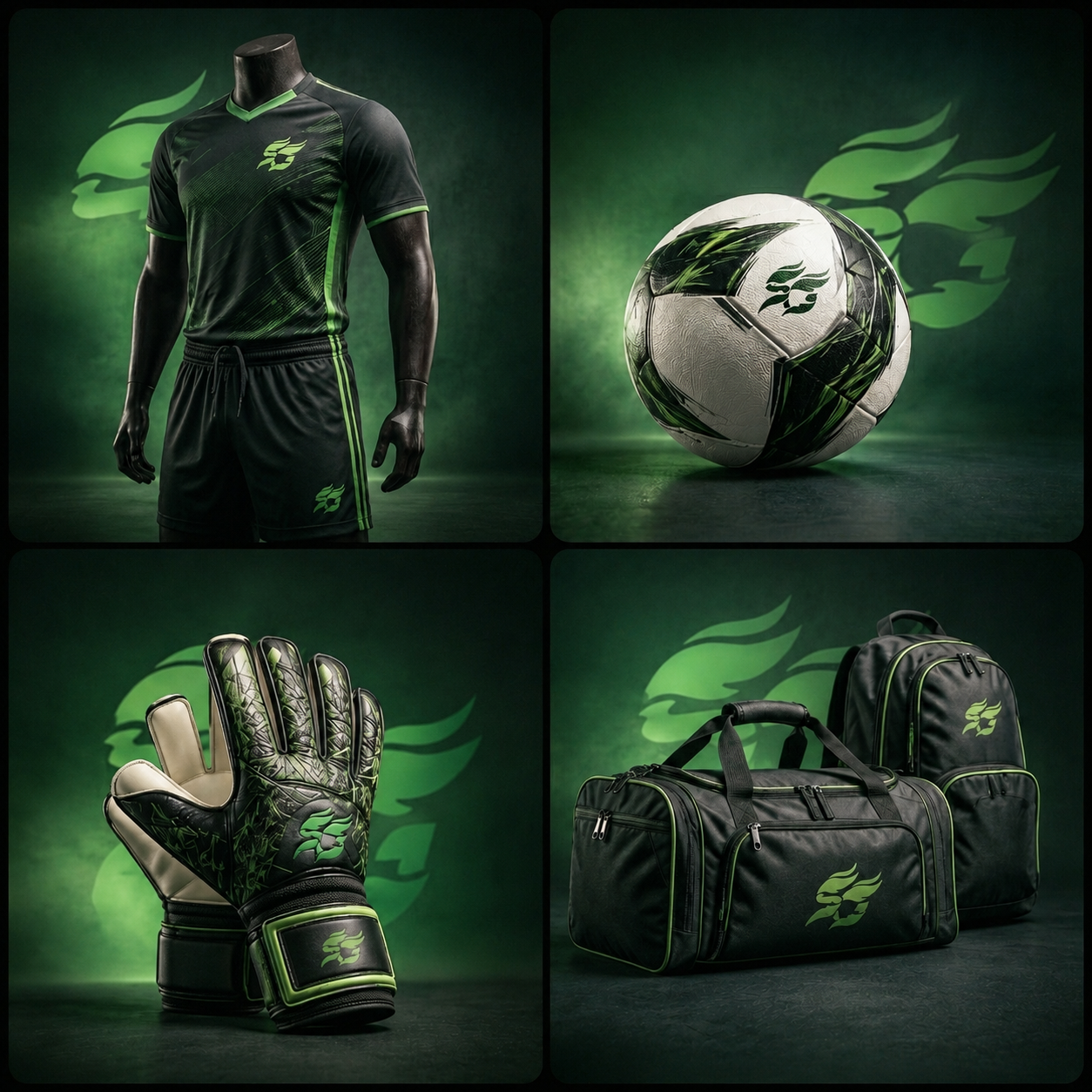
SpoGen’s product range covers several B2B sports categories for brands, distributors, wholesalers, retailers, academies and clubs. Buyers can discuss:
- Custom goalkeeper gloves for OEM, private-label and bulk orders.
- Soccer balls with custom designs and branding.
- Sports apparel including custom teamwear and sports clothing.
- Sports bags for brands, teams, academies and retailers.
SpoGen also provides OEM manufacturing, ODM development, private-label manufacturing, customization, wholesale, and bulk production. The company holds BSCI, ISO 9001:2015, and ISO 14001:2015 certifications. MOQ and sample lead times can vary by product and specification, so buyers should confirm them directly with SpoGen. For example, goalkeeper glove MOQ can be flexible, while the typical sample lead time is around 3–4 weeks. Sample pricing is also confirmed directly based on the buyer’s requirements.
How US Brands Can Prepare Before Meeting a Supplier?
A short, focused meeting is more useful than a long, unfocused one. Before you meet Spogen (PVT) LTD. or any other sports goods supplier at ISPO 2026 or afterward have the following ready:
- Product requirements: Which product(s) you need and any must-have features
- Target market: Where the product will be sold, such as retail, wholesale, team or club use
- Estimated order volume: Even a rough quantity range helps SpoGen (PVT) LTD. understand your production needs and give a more useful response
- Product specifications: Materials, sizing, colorways, and any technical details
- Branding requirements: Logo placement, private-label needs, and custom design elements
- Packaging requirements: Retail packaging, polybags, custom labeling, barcodes, and other packaging needs
- Target timeline: When you need samples and when you need the bulk order delivered
- Required certifications: Any certifications your market, customers, or retail partners require
- Sample requirements: What you need to check before placing a bulk order
- Your questions: Keep a written list so you do not miss important questions during the meeting
If you plan to meet SpoGen (PVT) LTD., bringing these details can help the discussion move quickly from general product questions to your actual OEM, ODM, private-label or bulk-order requirements.
Bringing the same information to every supplier meeting also makes it easier to compare suppliers afterward because you are asking everyone the same questions.
Can US Sports Brands Source Custom Sports Goods from Sialkot?
Yes. Sialkot, Pakistan, is widely known in the sporting goods industry as a long-established manufacturing center, particularly for footballs, gloves and other stitched sports equipment. Many international sports brands have sourced from factories based in the city for decades.
For a US brand, sourcing from Sialkot works the same way as sourcing from any other manufacturing hub: you research the manufacturer, verify their capabilities and certifications, request samples and build the relationship from there.
SpoGen Pvt Ltd is one example of a B2B sports goods manufacturer based in Sialkot. SpoGen is not the only manufacturer in the region, and this article is not a claim that any one supplier is automatically the best fit for your brand. It is worth doing the same evaluation with SpoGen that you would do with any other supplier on your shortlist.
Why US Sports Brands May Consider a Sialkot Manufacturer?
Sourcing from a Sialkot-based manufacturer comes down to the same practical factors as sourcing anywhere else:
- Customization: Many Sialkot manufacturers, including Spogen, work with buyers on custom colors, materials and branding for private-label products.
- Manufacturing specialization: The region has a long manufacturing history in specific sports categories, particularly footballs and gloves, which means deep hands-on experience with these products.
- B2B production experience: Factories here are generally set up for B2B and wholesale order volumes, not single-unit retail.
- Private-label development: Manufacturers that offer OEM/ODM services can help develop a product under your own brand, from spec sheet to finished goods.
- Product development support: A manufacturer that has made a product category for years can often flag practical issues in a spec before production starts.
- Communication: Look for a supplier with a dedicated contact and reasonable response times across time zones.
- Sampling and quality control: Ask each manufacturer to walk you through their own sampling and QC process, rather than assuming it matches another factory you have worked with.
We are not claiming a Sialkot manufacturer is automatically cheaper, faster or higher quality than manufacturers elsewhere. Those factors depend on the specific company, product and order and should be verified supplier by supplier.
Frequently Asked Questions
US brands can use the official ISPO exhibitor information, filter by product category, shortlist manufacturers, verify their capabilities and certifications, and arrange meetings before or during the event.
The most reliable source is the official ISPO website. Third-party exhibitor lists are sometimes outdated or incomplete.
Ask about factory ownership, product categories, customization, MOQ, sample process, production lead time, quality control, certifications and OEM/ODM/private-label capability.
Check their certifications (such as BSCI or ISO 9001), ask for factory photos or videos, review product samples and confirm their business registration and export experience.
Yes. Sialkot is a well-known manufacturing hub for sporting goods, and US brands regularly source from factories there, following the same vetting process used for any overseas supplier.
Ces. Sialkot is a well-known manufacturing hub for sporting goods and US brands regularly source from factories there, following the same vetting process used for any overseas supplier.
Prepare your product requirements, target market, estimated order volume, specifications, branding and packaging requirements, timeline, required certifications and a written list of questions.
Use the same checklist and questions for every supplier, request identical specs for quotes and compare samples side by side rather than deciding from memory or first impressions.
Yes, most manufacturers offer samples before a bulk order. Ask about sample cost, turnaround time and their revision process before requesting one.
You can reach SpoGen directly through the Spogen website to discuss goalkeeper gloves, soccer balls, sports apparel and private-label manufacturing needs.
How to Contact a Sports Goods Supplier After ISPO 2026?
A typical path from an ISPO meeting to a finished order looks like this:
- ISPO meeting: initial conversation and capability check
- Requirements: you send a clear spec sheet, quantities and timeline
- Supplier follow-up: the supplier confirms feasibility and next steps
- Sample: a sample is produced and sent for review
- Evaluation: you check the sample against your spec and quality standards
- Revisions: any needed changes are made and re-sampled if necessary
- Quotation: the supplier provides pricing based on your final spec and quantity
- Production: the bulk order goes into production once terms are agreed
- Quality control: inspection happens during and/or before shipment
- Shipment: the finished order is exported to your market
This workflow applies whether you met the supplier at ISPO 2026 or found them through another research.
Looking for a B2B sports goods manufacturer before or after ISPO 2026? Contact SpoGen for free B2B Quote to discuss your product requirements, customization and private-label manufacturing needs.