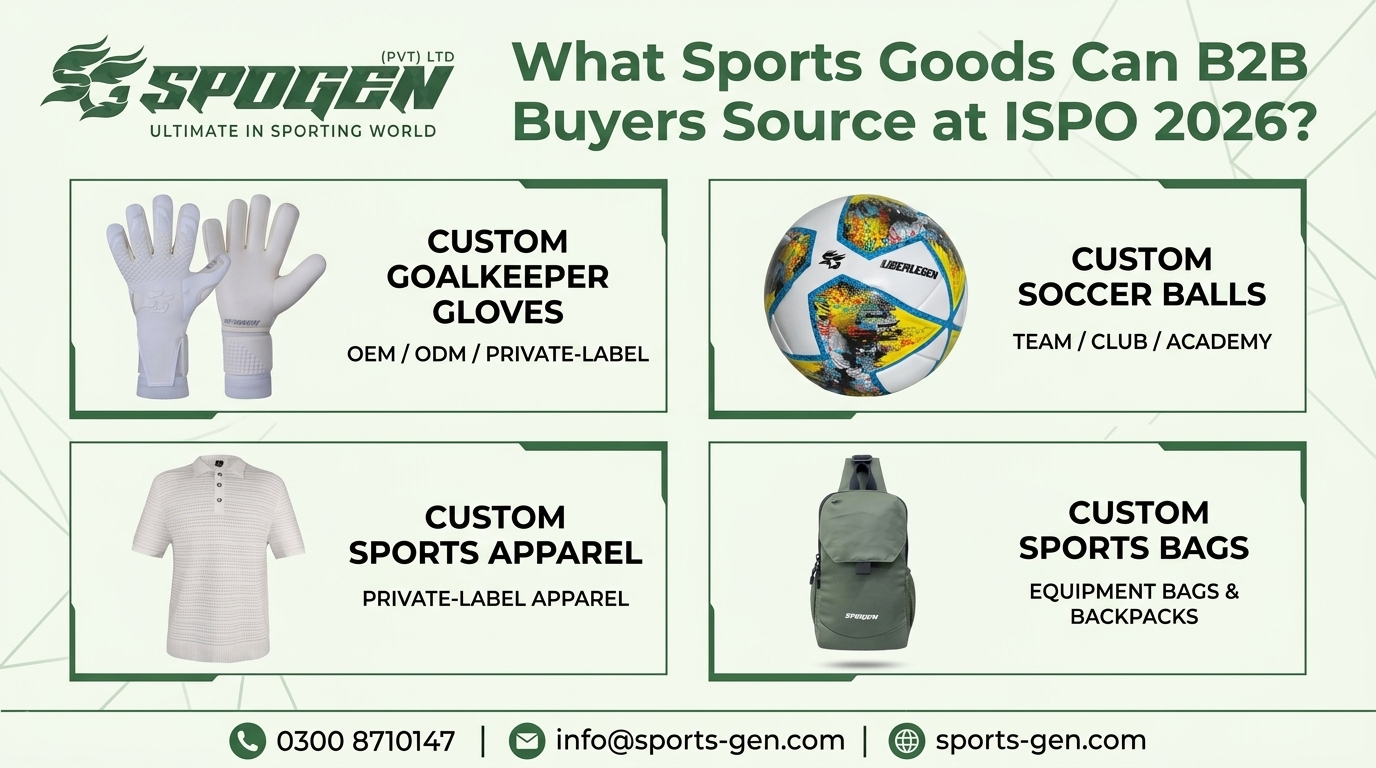
What Sports Goods Can B2B Buyers Source at ISPO 2026?
ISPO 2026 will bring sports brands, retailers, distributors, buyers and other industry professionals together at RAI Amsterdam. The ISPO Leaders’ Summit takes place on November 3, followed by the ISPO Exhibition on November 4–5, 2026.
For B2B buyers, a trade show is not only a place to discover new products. It can also be an opportunity to discuss product development, customization, branding, packaging and bulk production with sports goods manufacturers and suppliers.
If you are planning sports product sourcing around ISPO 2026, it helps to know which product categories match your business before you start supplier discussions.
Quick Answer: What Sports Goods Can B2B Buyers Source at ISPO 2026?
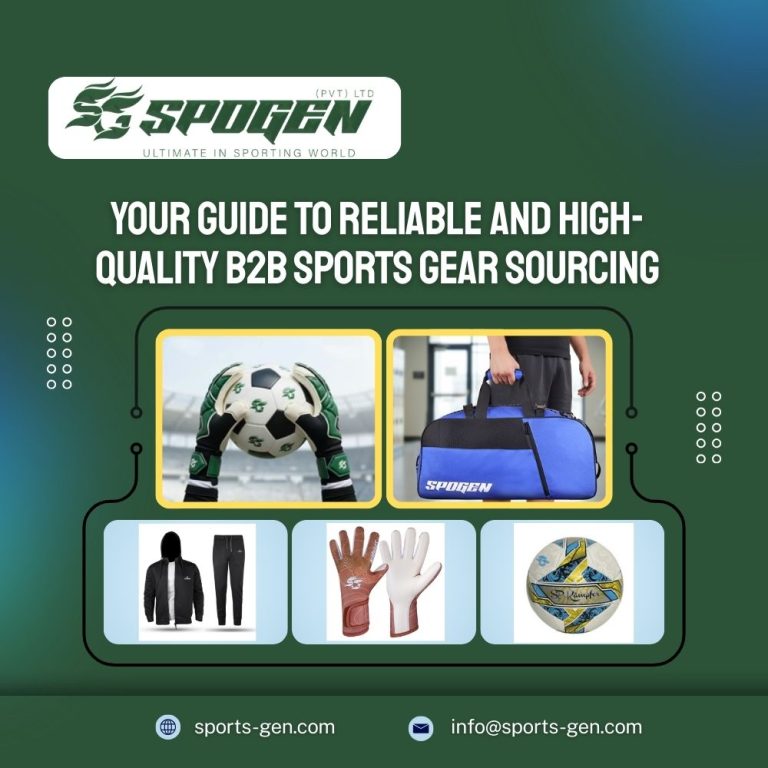
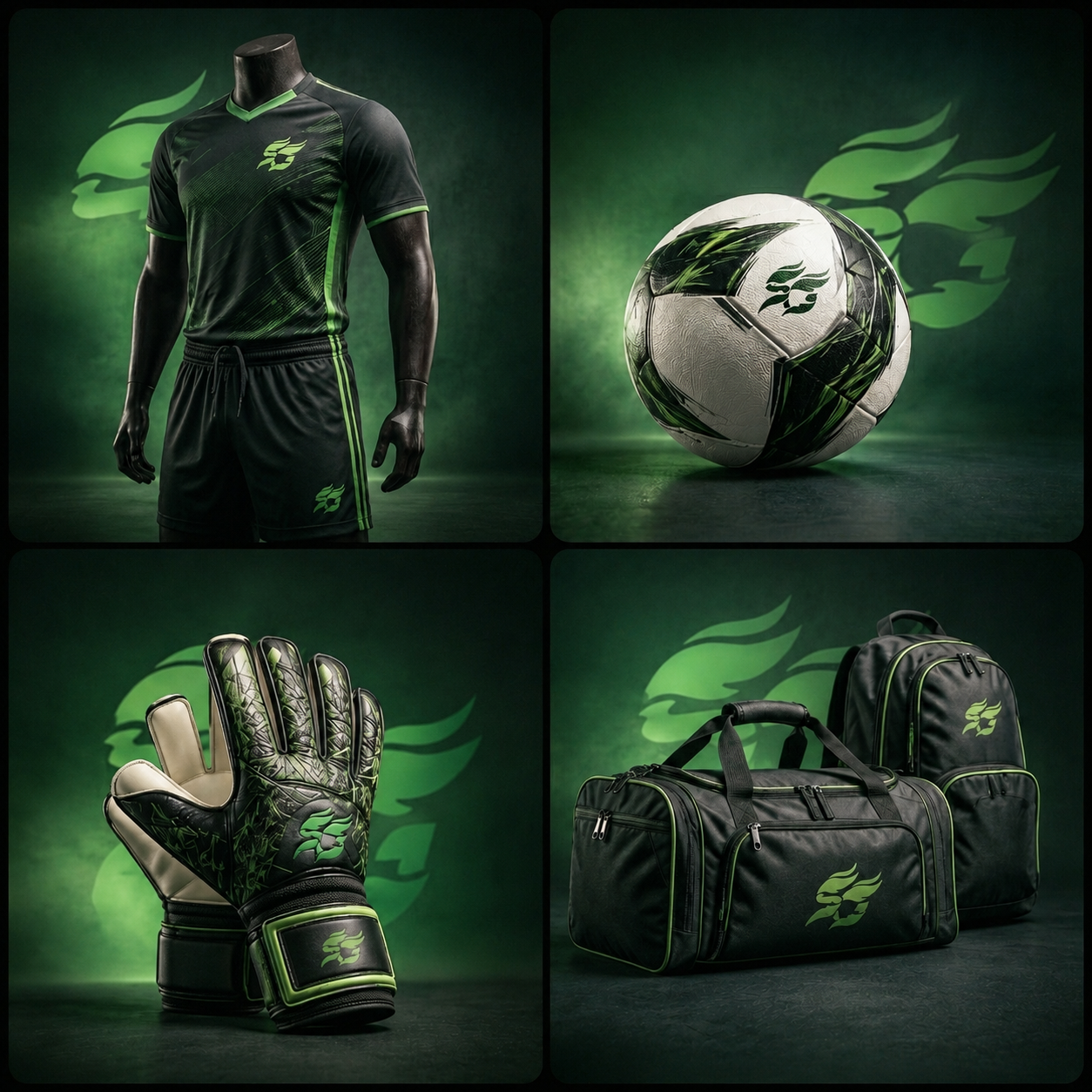
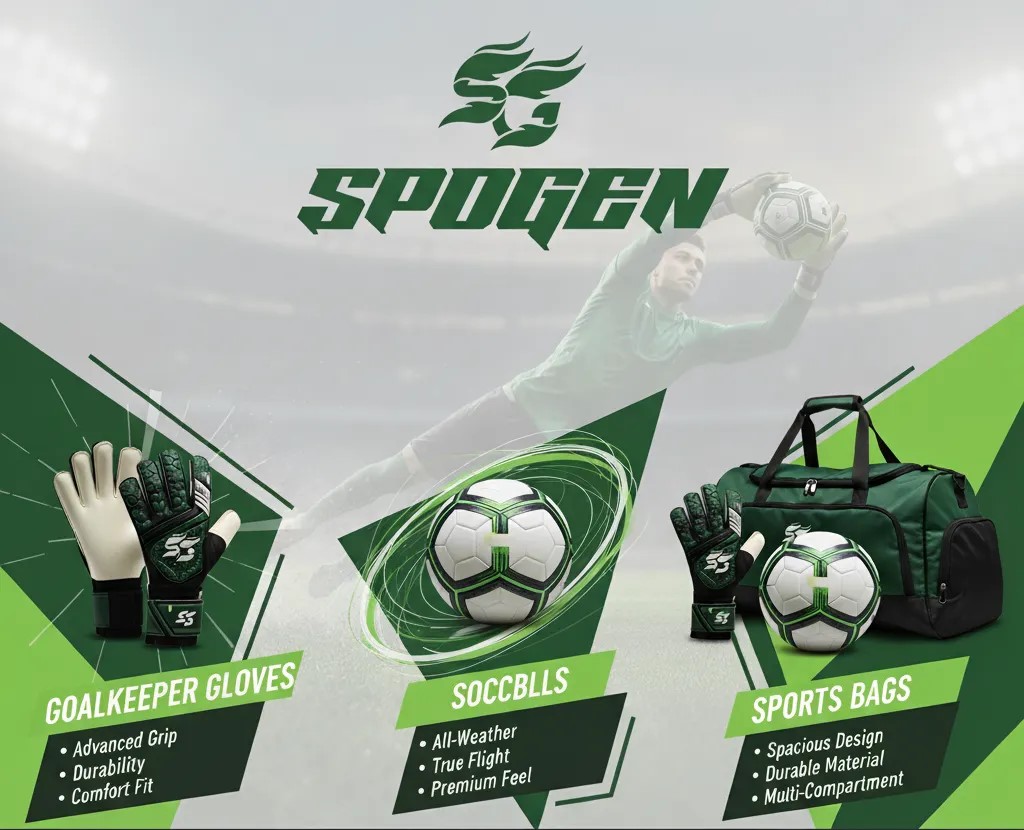
B2B buyers can explore many types of sports products around ISPO 2026, depending on the suppliers and manufacturers they meet. For businesses looking for customizable team and sports products, key categories include custom goalkeeper gloves, custom soccer balls, sports apparel and sports bags. Buyers can also discuss OEM, ODM, private-label and custom manufacturing options, including product specifications, materials, branding, packaging and sampling. The right product depends on the buyer’s target market, customers, sales channel, required customization and bulk-order needs.
What Types of Sports Goods Can Buyers Source at ISPO 2026?
Sports product sourcing can mean different things for different B2B businesses.
A sports retailer may be looking for finished products to add to its collection. A football academy may need team equipment. A private-label brand may need products with its own logo, colors and packaging. An importer or distributor may be looking for products suitable for its regional market.
Some useful product categories to explore include:
- Custom goalkeeper gloves
- Custom soccer balls
- Custom sports apparel
- Custom sports bags
- Team and club products
- Training products
- Promotional sports products
- Other custom sports products, depending on the manufacturer’s capabilities
The important point is to discuss the actual product specifications, not just the product name. Two buyers asking for “soccer balls” may have very different requirements for construction, use, artwork, branding, packaging and target market.
ISPO’s 2026 event format includes the Leaders’ Summit on November 3 and the main exhibition on November 4–5 at RAI Amsterdam.
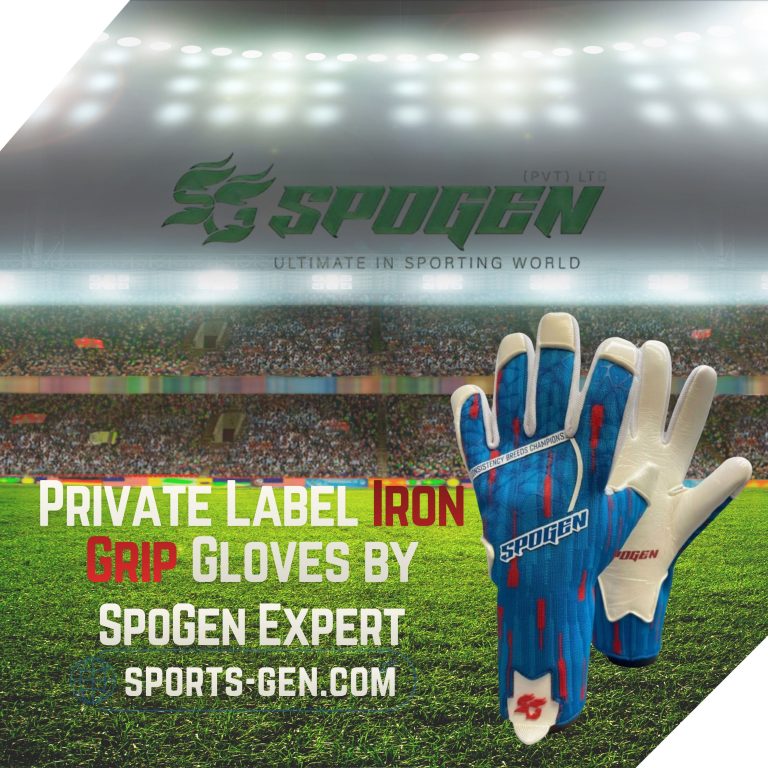
Custom Goalkeeper Gloves
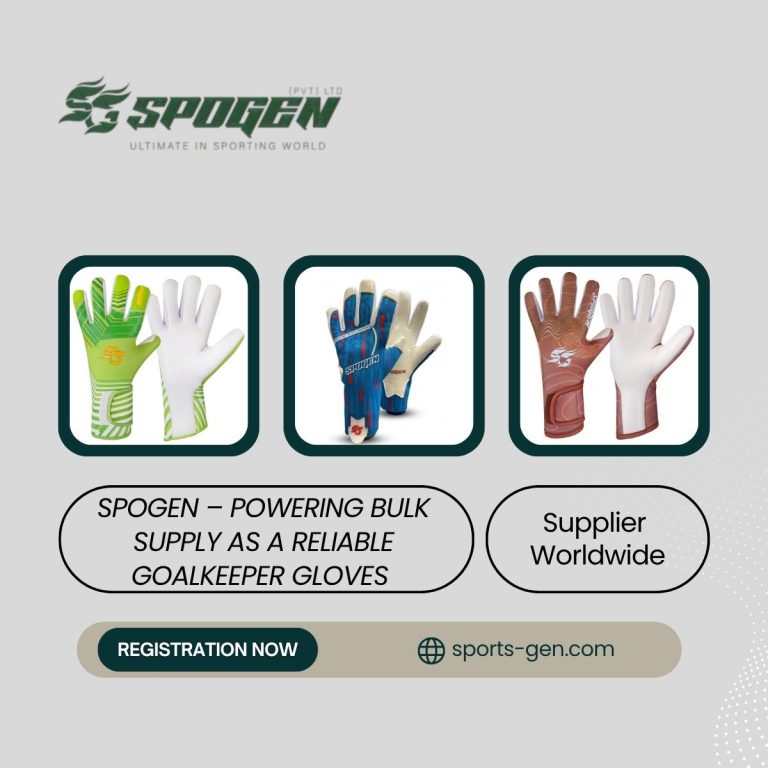
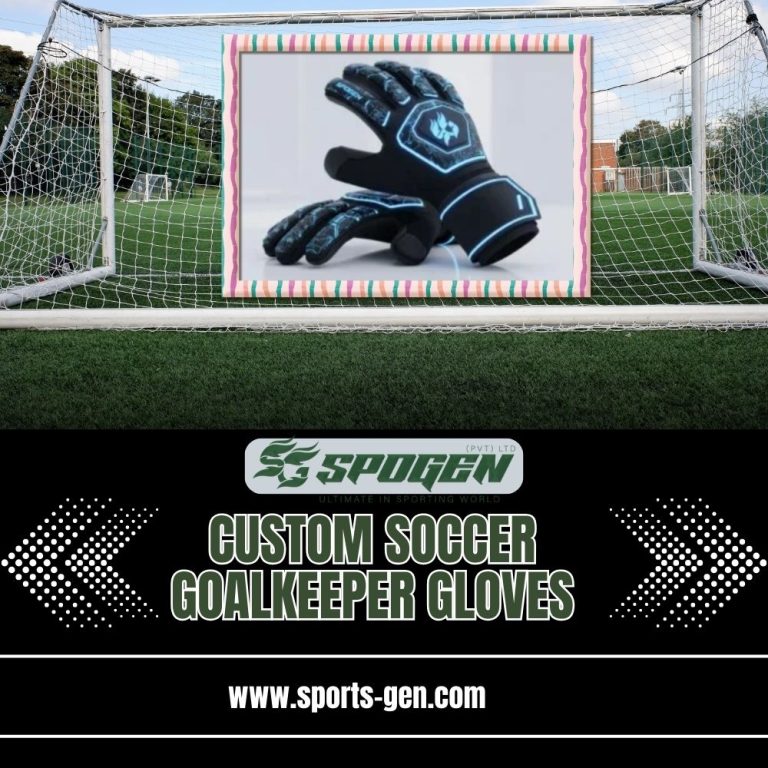
Goalkeeper gloves can be a useful product category for football brands, academies, clubs, retailers and distributors looking for customized products. When discussing custom goalkeeper gloves with a manufacturer, buyers should look beyond colors and logos. Product construction can affect how the gloves feel and perform.
Product types
Depending on the manufacturer’s available development options, buyers may discuss:
- Training goalkeeper gloves
- Match-oriented goalkeeper gloves
- Youth goalkeeper gloves
- Club or academy gloves
- Branded goalkeeper gloves
- Private-label goalkeeper gloves
Build Goalkeeper Gloves Around Your Brand Requirements
B2B buyers can customize goalkeeper gloves according to the needs of their target users, market and product positioning. Customization may include the palm latex type and thickness, glove cut, backhand and finger construction, gussets, wrist closure, strap design, colors, logo placement, printed graphics, labels and packaging. Buyers should provide clear product requirements so the manufacturer can understand the intended use and market. For example, a youth training glove may require different specifications from a premium retail glove.
Brand presentation is another important part of product sourcing. Depending on the manufacturer’s capabilities, buyers can discuss options such as brand logos, product labels, hangtags, retail packaging, custom boxes, bags and product information. These elements can help create a consistent product identity across the glove and its packaging. For buyers specifically sourcing customized goalkeeper gloves, Spogen’s custom goalkeeper gloves manufacturing page provides a relevant product reference.
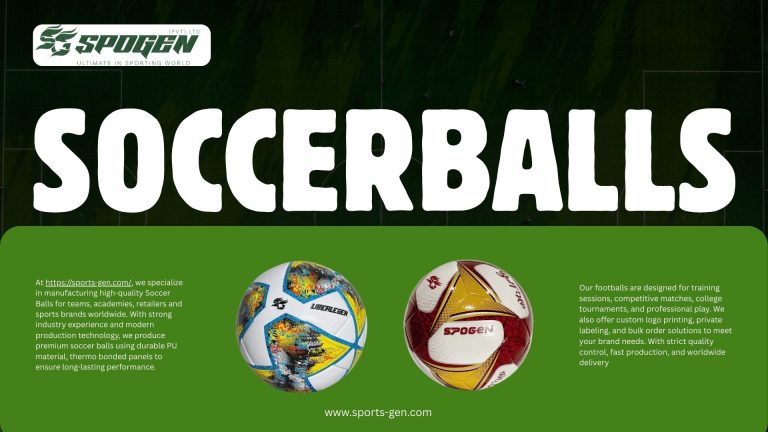
Custom Soccer Balls
Soccer balls are another important category for B2B sports goods sourcing.
A buyer may need balls for retail sales, football academies, clubs, training programs, promotional campaigns or branded team programs. Each application can require a different product specification.
Types of soccer balls to discuss
B2B buyers can explore products such as:
- Training soccer balls
- Match-oriented soccer balls
- Club and team balls
- Academy balls
- Promotional soccer balls
- Custom-branded soccer balls
- Private-label soccer balls
Soccer ball customization
Customization can involve several parts of the product:
- Ball artwork
- Brand logo
- Club logo
- Colors
- Printed graphics
- Panel design
- Surface finish
- Packaging
- Product labeling
The buyer should provide artwork in the correct format and explain where the branding should appear.
Construction considerations
Before requesting a quotation, buyers should also discuss:
- Construction method
- Number and type of panels
- Outer material
- Bladder
- Surface texture
- Intended playing or training use
- Size requirements
- Weight requirements
- Product testing or quality requirements relevant to the target market
Do not assume that every manufacturer offers every construction option. Ask what can actually be produced and confirmed for your specific product. For businesses exploring this category, Spogen’s custom soccer ball manufacturing page can be used as a product-specific internal resource.
Custom Sports Apparel
Sports apparel can cover a wide range of B2B products. It is especially relevant to sports brands, clubs, academies, retailers and private-label businesses.
Instead of asking only for “sportswear,” buyers should define the exact garments they need.
Sports apparel products
Possible products include:
- Teamwear
- Training wear
- Custom uniforms
- Hoodies
- Tracksuits
- Jackets
- Sports pants
- Training tops
- Club apparel
- Private-label sportswear
Choose Sports Apparel Materials and Branding for Your Market
Fabric and material selection can have a major impact on the performance, comfort, appearance and durability of sports apparel. B2B buyers should discuss factors such as fabric composition, weight, stretch, breathability, moisture management, warmth, water resistance, durability, intended season and type of sports activity.
A lightweight training top, for example, may require different material properties from a winter sports jacket. Buyers can also discuss garment branding and customization, including the main brand logo, team or sponsor logos, printed graphics, embroidery, woven and neck labels, size labels, custom colors, patterns, and packaging. Defining these requirements clearly helps manufacturers understand the desired product and prepare it according to the buyer’s specifications.
Packaging should also be considered early if the apparel is going directly into retail or e-commerce channels. SpoGen’s custom sports apparel manufacturing page can be linked here for buyers who want to explore the apparel category in more detail.
Custom Sports Bags
Sports bags are useful for clubs, teams, academies, retailers, sports brands and equipment businesses. They can also work as complementary products when a business sells other sports equipment.
Types of sports bags
Depending on the manufacturer’s product range, buyers can discuss:
- Team bags
- Equipment bags
- Sports backpacks
- Training bags
- Duffle-style sports bags
- Shoe-compartment bags
- Custom club bags
- Branded sports bags
Design Sports Bags for Their Intended Use
B2B buyers should define sports bag requirements based on how the product will be used and who will use it. Important specifications can include bag dimensions, main compartment size, shoe compartments, equipment compartments, side and internal pockets, zipper type, handles, shoulder or backpack straps, reinforcement areas, padding and water-resistant materials where required.
Buyers can also discuss available materials and branding options with the manufacturer, including brand or team logos, printed graphics, embroidery, custom colors, woven labels, hangtags and packaging. For example, a football academy may require a durable equipment bag with practical storage, while a retail sports brand may place greater emphasis on appearance, organization, branding and retail packaging.
How Should Buyers Choose Which Sports Goods to Source?
Choosing the right product starts with the buyer’s business model. Before contacting a sports goods manufacturer, consider these points.
Target customers
Who will buy the product?
- Football players
- Clubs
- Academies
- Schools
- Retail customers
- Sports teams
- Outdoor or fitness customers
- Corporate or promotional buyers
Target market
Consider the country or region where the product will be sold. Your target market can affect:
- Product specifications
- Label requirements
- Packaging
- Product positioning
- Customer expectations
- Quality requirements
Product positioning
Decide what type of product you want to develop:
- Entry-level
- Training
- Team
- Mid-range
- Premium
- Promotional
- Private-label retail product
The manufacturer needs this information to understand your product direction.
Order quantity
Your expected order quantity can affect the production discussion, sampling process, packaging plan and quotation. Do not assume an MOQ. Ask the manufacturer what order quantities are available for the specific product.
Customization requirements
Decide how much customization you need.
For example:
- Logo only
- Custom colors
- Full artwork
- Custom materials
- Custom construction
- Custom labels
- Custom packaging
- New product development
Branding and packaging
If you are building your own brand, decide whether you need:
- Brand labels
- Printed logos
- Hangtags
- Retail packaging
- Custom boxes
- Individual product packaging
Product development
If your product is not available as a standard design, ask whether the manufacturer can support sample development and product customization.
OEM, ODM and Private-Label Options for Sports Goods
The four main product categories can fit different manufacturing models.
| Manufacturing Model | When It Fits B2B Buyers | What Buyers May Provide or Customize | Example Sports Products |
|---|---|---|---|
| OEM Sports Goods | When the buyer has defined product requirements and wants production according to their specifications. | Product specifications, artwork, materials, colors, branding and packaging requirements. | Goalkeeper gloves, soccer balls, sports apparel, sports bags |
| ODM Sports Goods | When the buyer wants to use or adapt an existing manufacturer design or development option. | Colors, branding, selected materials, product details and packaging. | Goalkeeper gloves, soccer balls, apparel, bags |
| Private-Label Sports Products | When a business wants to sell manufactured products under its own brand name. | Brand identity, logos, labels, packaging, colors and other available customization options. | Goalkeeper gloves, soccer balls, sports apparel, sports bags |
| Custom Manufacturing | When the buyer needs a product developed around specific requirements rather than simply selecting an existing design. | Product specifications, materials, construction, dimensions, colors, branding, packaging and other agreed requirements. | Custom sports products based on buyer requirements |
What Should Buyers Ask Before Sourcing Sports Goods?
A good sourcing discussion should cover the product from development to bulk production.
Useful questions include:
- What product specifications can be customized?
- What materials and construction options are available?
- Can you develop a sample based on our requirements?
- What branding methods are available?
- Can you provide custom labels and packaging?
- What quality-control process is used during production?
- What product information is needed before preparing a quotation?
- What production details should be confirmed before placing a bulk order?
- Can the same manufacturer handle more than one product category?
- What artwork, measurements or technical files should the buyer provide?
The answers should be specific to the product being sourced. A soccer ball, goalkeeper glove and sports jacket will not have the same technical requirements.
Product Sourcing Comparison for B2B Buyers
| Product Category | Suitable B2B Buyers | Possible Customization | Key Questions for Manufacturer |
|---|---|---|---|
| Goalkeeper Gloves | Football brands, clubs, academies, retailers, distributors | Palm, cut, backhand, colors, logos, labels, packaging | What glove construction and palm options are available? Can the design and branding be customized? |
| Soccer Balls | Football brands, clubs, academies, retailers, promotional businesses | Artwork, colors, logos, panel design, construction, packaging | What construction methods, sizes, materials and artwork options are available? |
| Sports Apparel | Sports brands, clubs, academies, retailers, private-label businesses | Fabric, colors, patterns, logos, labels, printing, embroidery, packaging | Which fabrics and garment constructions are available? Can labels, branding and packaging be customized? |
| Sports Bags | Teams, academies, sports brands, retailers, distributors | Materials, dimensions, compartments, colors, logos, labels, packaging | Can dimensions, compartments, materials and branding be changed for the intended use? |
This comparison can help buyers decide which product information to prepare before starting a sourcing conversation.
Why Product Specifications Matter Before Requesting a Quote?
A product name alone is usually not enough for an accurate B2B sourcing discussion. For example, saying “I need 1,000 custom soccer balls” leaves many questions unanswered.
The manufacturer may still need to know:
- Ball size
- Intended use
- Construction
- Material requirements
- Artwork
- Branding
- Packaging
- Target market
- Delivery requirements
The same applies to apparel, gloves and bags.
For apparel, the manufacturer may need garment measurements, fabric requirements, artwork, size range and branding details. For goalkeeper gloves, the discussion may include glove cut, palm, backhand, closure and artwork. For sports bags, dimensions, compartments, materials and branding can affect the product design.
Better product specifications usually lead to a clearer sourcing discussion.
How to Plan a Product Sourcing Meeting at ISPO 2026
If you already know which product categories you want to source, consider arranging meetings before arriving at the event. This is especially useful when you need to discuss several products or have specific development requirements.
A meeting request can include:
- Your company name
- Your business type
- Target market
- Product category
- Product specifications
- Customization requirements
- Branding needs
- Packaging requirements
- Approximate order requirements
- Questions you want to discuss
How SpoGen Supports B2B Sports Goods Sourcing?
SpoGen is a B2B sports goods manufacturer based in Sialkot, Pakistan.
Relevant product categories include:
- Custom goalkeeper gloves
- Soccer balls
- Sports apparel
- Sports bags
Depending on the product requirements, relevant manufacturing services may include:
- OEM manufacturing
- ODM services
- Private label
- Product customization
- Wholesale and bulk production
For B2B buyers, the useful starting point is not simply choosing a product. It is explaining what the product needs to do, who will use it, how it will be branded and how it will be sold. Buyers can explore SpoGen’s B2B sports goods manufacturing services and the individual product categories before discussing their requirements.
Book a Meeting in Advance
If you want to discuss custom goalkeeper gloves, soccer balls, sports apparel or sports bags with Spogen during ISPO 2026, you can book a meeting in advance rather than relying only on an unplanned conversation at the event.
Bring your product ideas, artwork, specifications and sourcing questions so the discussion can focus on your actual requirements.
Frequently Asked Questions
What sports goods can I source at ISPO 2026?
B2B buyers can explore many sports product categories depending on the manufacturers and suppliers they meet. For customized sports products, relevant categories include goalkeeper gloves, soccer balls, sports apparel and sports bags.
Can I source custom soccer balls for my brand?
Yes, custom soccer balls can be discussed with manufacturers that offer soccer ball customization. Buyers should provide requirements for construction, size, artwork, branding, packaging and intended use.
Can sports apparel be customized for private-label businesses?
Yes. Depending on the manufacturer’s capabilities, private-label sports apparel can include custom colors, fabrics, designs, logos, labels, printing, embroidery and packaging.
Can sports bags be manufactured with custom branding?
Custom sports bags can be developed with branding options such as logos, printed graphics, labels and custom colors. Buyers should also define dimensions, materials and compartment requirements.
What information should I provide to a sports goods manufacturer?
Provide the product type, intended use, target market, specifications, materials, colors, branding, packaging requirements and any artwork or technical information you already have.
Which sports products are suitable for OEM manufacturing?
Goalkeeper gloves, soccer balls, sports apparel and sports bags can potentially fit OEM manufacturing when the manufacturer can meet the buyer’s required specifications. The exact OEM scope should be confirmed for each product.
Can one manufacturer produce multiple sports product categories?
Some manufacturers offer multiple product categories, but buyers should confirm the manufacturer’s actual capabilities for each product. Ask specifically about development, sampling, customization, branding and bulk production.
What should I confirm before requesting a B2B sports goods quotation?
Confirm the product specifications, materials, construction, sizes, customization, branding, packaging, expected quantity and quality requirements. Providing clearer information helps the manufacturer understand what needs to be quoted.
Conclusion
ISPO 2026 can be a useful place for B2B buyers to explore sports products, meet industry companies and discuss potential sourcing relationships. For businesses looking for customizable football and sports products, custom goalkeeper gloves, soccer balls, sports apparel and sports bags are four practical categories to consider.
The best starting point is to define the product clearly. Know your target customer, market, product requirements, branding, packaging and expected order needs before starting the sourcing discussion.
If you are planning to source custom goalkeeper gloves, soccer balls, sports apparel, sports bags or other sports products, Spogen can discuss your requirements for OEM, ODM, private-label and custom manufacturing. Request your Free B2B Quote from Spogen today. Share your product requirements, customization needs, branding details and order expectations with our team to start a B2B sourcing discussion.