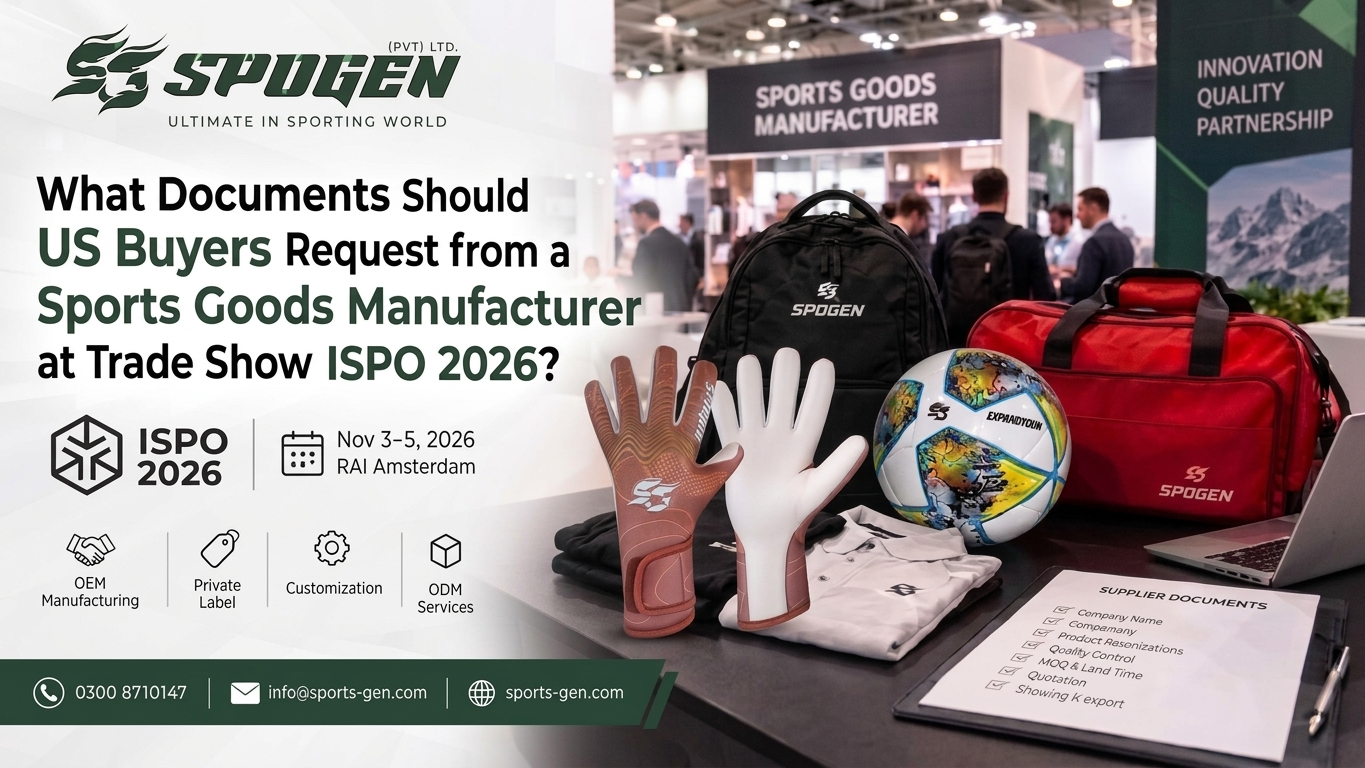
What Documents Should US Buyers Request from a Sports Goods Manufacturer at Trade Show ISPO 2026?
When you meet a sports goods manufacturer at ISPO 2026, a good booth and product samples are not enough to evaluate a supplier. Before you order samples or bulk goods from an overseas manufacturer, you need documents and facts you can check.
ISPO 2026 is a good place to start those checks. It takes place at RAI Amsterdam. November 3 is the ISPO Leaders Summit. The main ISPO Expo runs November 4–5, 2026. Many sports goods suppliers meet buyers face to face there, so it is a good time to ask for the right documents.
This guide shows US sports brands, retailers, distributors, wholesalers and importers what to ask for and why it matters.
Quick Answer: What Documents Should a US Buyer Request?
A US buyer should normally request company information, current certifications, product specifications, quality-control information, MOQ, sample details, a written quotation, production lead time and shipping information before moving toward a bulk order.
In short:
- Company profile and factory details
- Certificates (BSCI, ISO 9001, ISO 14001, where applicable)
- Product spec sheets
- Quality-control process
- Sample cost, time and approval steps
- MOQ and production lead time
- Quotation with payment terms and Incoterms
- Export and packaging details
- OEM / private-label artwork and approval steps
The sections below explain each one in simple words.
Why Do Manufacturer Documents Matter for US Sports Buyers?
Documents help you compare suppliers fairly and lower your buying risk. Words at a booth are easy to say. Papers can be checked. For American sports brands, clubs, retailers and sports academies mistakes cost real money. A wrong size chart, a late shipment or a missing label can delay your season. Clear documents help you:
- Confirm the supplier is a real manufacturer
- Compare two or three suppliers on the same points
- Avoid misunderstandings on price, quality and timing
- Keep a record if something goes wrong later
No single paper proves a supplier is perfect. But a supplier who shares clear, consistent information is usually easier to work with.
Company Profile and Business Information
Ask for a current company profile so you know who you are dealing with.
Request:
- Legal business name
- Factory and office address
- Contact details of your sales contact
- Business registration details where appropriate
- Years of manufacturing experience
- Product categories
Why it matters: You need to know if you are speaking with a factory or a trading company. Both can be fine, but you should know which one it is. Ask where your product will actually be made. Also check that the name on the quotation matches the company name on other documents.
What Certifications Should a Sports Goods Manufacturer Have?
There is no single certificate every sports goods manufacturer must have. Ask which certifications apply to your product and market, then ask for current copies.
Common one’s buyers ask about:
- BSCI: relates to social and working-conditions standards
- ISO 9001: a quality management system standard
- ISO 14001: an environmental management system standard
- Product-specific test reports: where your product type needs them
What to check:
- Is the certificate current, not expired?
- Does the company name match the supplier?
- Does the scope cover the products or site you are buying from?
- Who issued it?
Two important points. First, a certificate does not automatically prove that every product is high quality. It shows a system or standard was assessed. Second, rules for product testing depend on the product and where it is sold. For US requirements, check with your own compliance advisor or customs broker.
Product Specifications and Technical Details
A spec sheet tells you exactly what you are buying, so your sample and bulk order match.
Ask for these details for each product:
- Materials
- Construction method
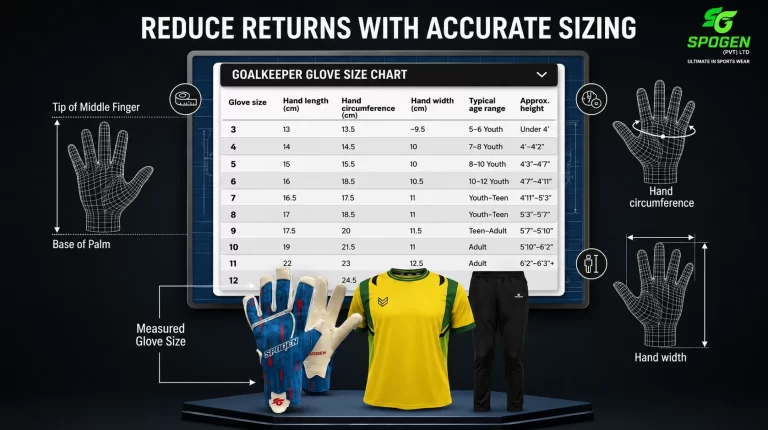
- Sizes and size chart
- Weight
- Colors
- Customization options
- Packaging specs
- Photos or spec sheets
Here is what to look for by product:
| Product | What to Ask For |
|---|---|
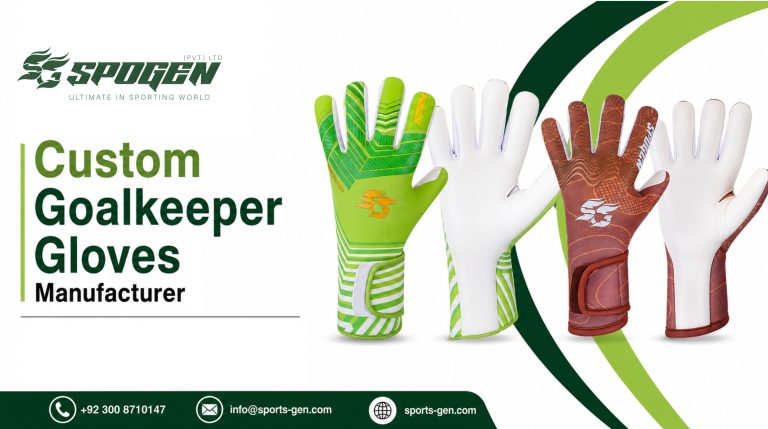
| Goalkeeper gloves | Palm latex type, cut style, backhand material, closure, size range |
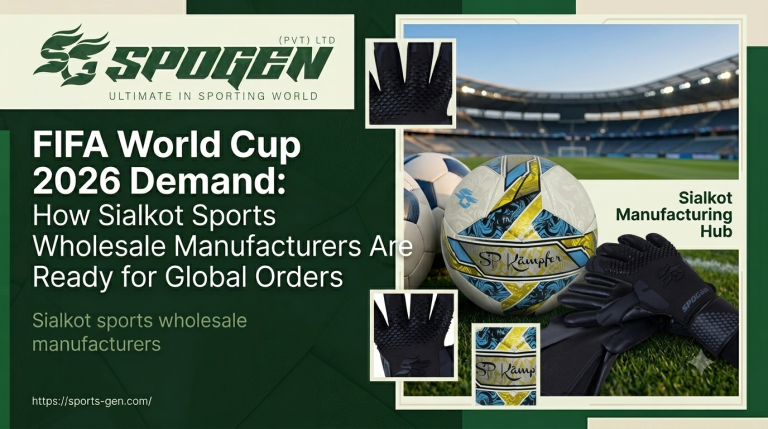
| Soccer balls | Ball size, panel count, cover material, stitching or bonding method, inner bladder type |
| Sports apparel | Fabric type, fabric weight, size chart, print or embroidery method |
| Sports bags | Fabric, zipper type, stitching, dimensions, capacity |
Ask for the spec sheet in writing. If the sample later differs from the spec, you have a clear reference.
Quality-Control Information
Ask how the manufacturer checks quality at each stage, not just at the end.
Good questions:
- How are incoming materials checked?
- What is checked during production?
- What happens at final inspection?
- What tests are done on the product, if any?
- How are defects handled and who pays for remakes?
- Can a third-party inspector visit before shipping?
Why it matters: Quality problems are cheaper to fix early. A supplier with clear steps can usually explain them easily. If the answers are vague, ask for a written QC outline. Do not assume a process exists unless the supplier can describe it.
Sample and Approval Information
Before you order samples, confirm the cost, timeline, revision rules and how an approved sample becomes bulk production.
Ask:
- Are samples free or paid? Is the cost refunded on a bulk order?
- How long does sampling take?
- How many revisions are allowed?
- Who pays for shipping the sample?
- How is the approved sample kept as a reference?
- How will bulk production match the approved sample?
Get the answers in writing. Many buyer-supplier disputes start with “I thought the sample was approved.”
MOQ and Production Information
MOQ (Minimum Order Quantity) is the smallest order a factory will accept. It can change by product, material and customization level.
Request:
- MOQ per product and per design or color
- Production capacity for your order size
- Production lead time
- Extra requirements for custom orders
- Seasonal busy periods
Why it matters: If you plan a spring launch, you need to know when to place the order. Ask if the lead time starts after sample approval, after deposit or after artwork approval. These start points can be very different.
Be careful with vague answers like “we can do any quantity.” Ask for a number in writing.
Quotation and Commercial Terms
A good quotation is clear enough that you can compare it line by line with another supplier’s quote.
A proper quotation should show:
- Product description and specs
- Quantity
- Unit price
- Customization charges
- Sample charges
- Packaging cost
- Tooling or mold charges, where needed
- Payment terms
- Production lead time
- Quotation validity date
- Shipping terms (Incoterms)
Quick definition: Incoterms are standard trade terms, such as FOB or EXW, that say who pays for and handles each shipping step. Ask the supplier which term the price is based on.
If two quotes use different terms, the cheaper one may not really be cheaper.
⏳ ISPO 2026 Countdown: Get Your Buyer Checklist Ready
With ISPO 2026 approaching, US sports brands, retailers, distributors and wholesalers can start preparing for supplier meetings at RAI Amsterdam. Before you visit a booth, make a simple checklist of the documents and information you want to review, from company details and certifications to product specifications, samples, MOQ, pricing and shipping terms. The event will take place at RAI Amsterdam, with the ISPO Leaders’ Summit on November 3 and the main ISPO Expo running November 4–5, 2026.
Shipping and Export Information
Ask how the goods will travel, who handles each step and what papers come with the shipment.
Clarify:
- Shipping method (air, sea, courier)
- Incoterms
- Export documents provided
- Carton and packing details
- Estimated shipping timeline
- Your destination requirements
- Who handles customs at each end
Customs rules change by product and by shipment. Do not treat any supplier’s answer as legal advice. Confirm import requirements with your customs broker or a qualified advisor.
OEM and Private-Label Documentation
If you want your own brand on the product, agree on the branding details in writing before samples start.
Ask about:
- Logo placement and size
- Artwork file formats
- Brand colors and Pantone matching
- Labels, hang tags, and care labels
- Custom packaging
- Approval steps for artwork and samples
- Intellectual property: who owns the designs, molds, and artwork?
For example, if you are building private-label goalkeeper gloves, confirm the palm design, wrist strap branding and box artwork before sampling. For custom soccer balls, confirm the panel graphics and print method. Ask the supplier how they protect your designs. A signed confidentiality or NDA agreement may help. Talk to your own lawyer for legal advice.
Sports Goods Manufacturer Document Checklist for US Buyers
| Document / Information | Why It Matters | What the Buyer Should Check |
|---|---|---|
| Company profile | Confirms who the supplier is | Legal name, address, product range |
| Factory address | Shows where goods are made | Match with other documents |
| Certifications (BSCI, ISO 9001, ISO 14001) | Shows standards the company follows | Valid dates, matching name, scope |
| Product spec sheet | Defines exactly what you are buying | Materials, sizes, weight, colors |
| QC procedure | Shows how defects are prevented | Incoming, in-line, and final checks |
| Test reports (if needed) | Supports product safety or performance | Product-specific and current |
| Sample terms | Avoids sample disputes | Cost, time, revisions, approval |
| MOQ | Sets your minimum order | Per product, design and color |
| Production lead time | Protects your season | When the clock starts |
| Quotation | Lets you compare suppliers | Unit price, extra charges, validity |
| Payment terms | Affects your cash flow | Deposit, balance, timing |
| Incoterms | Shows who pays for shipping steps | FOB, EXW, or other |
| Packaging details | Affects cost and shipping | Carton size, labels, barcodes |
| Artwork and branding approval | Keeps your brand correct | Files, proofs, approval steps |
| IP terms | Protects your designs | Who owns molds and artwork |
What Should US Buyers Ask SpoGen at ISPO 2026?
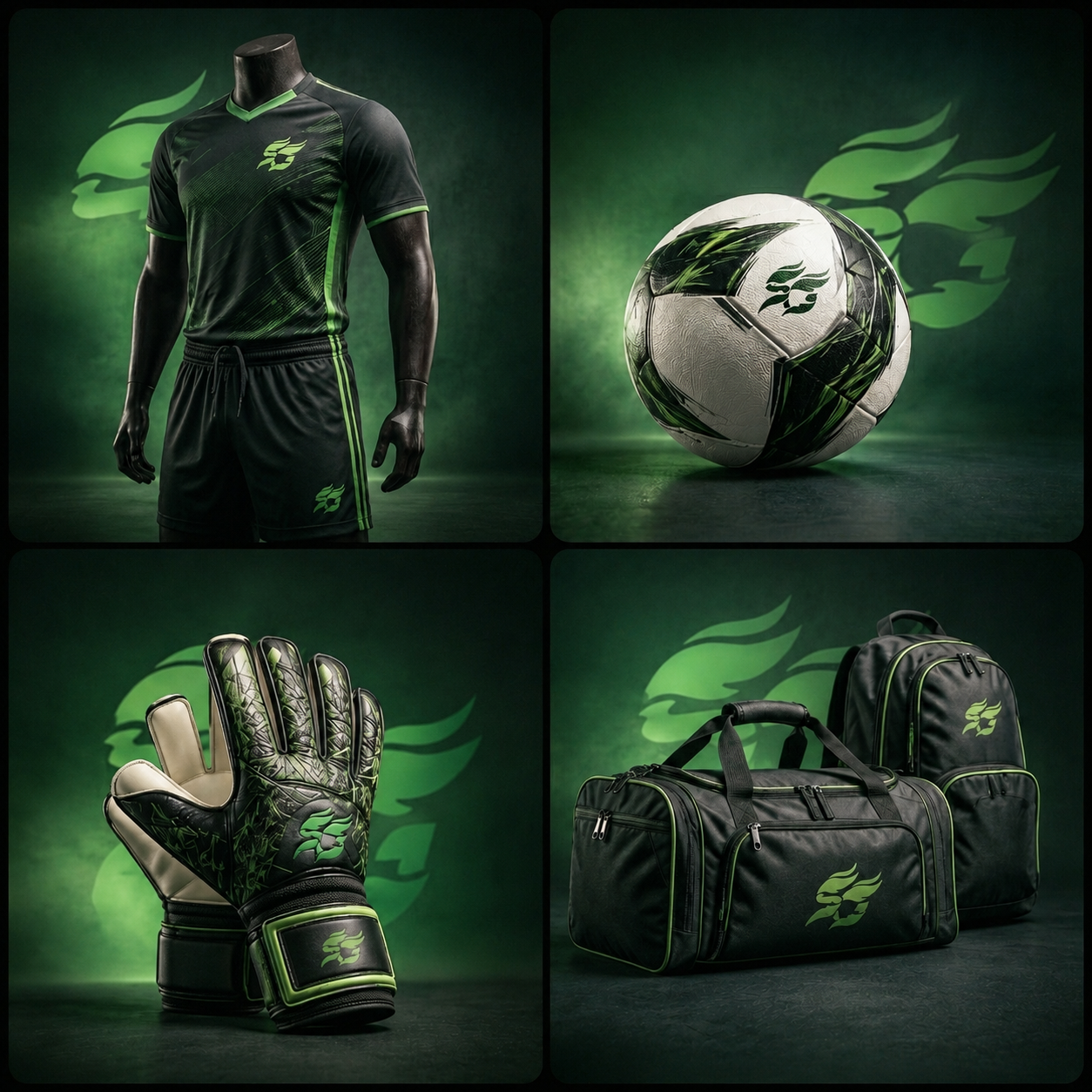
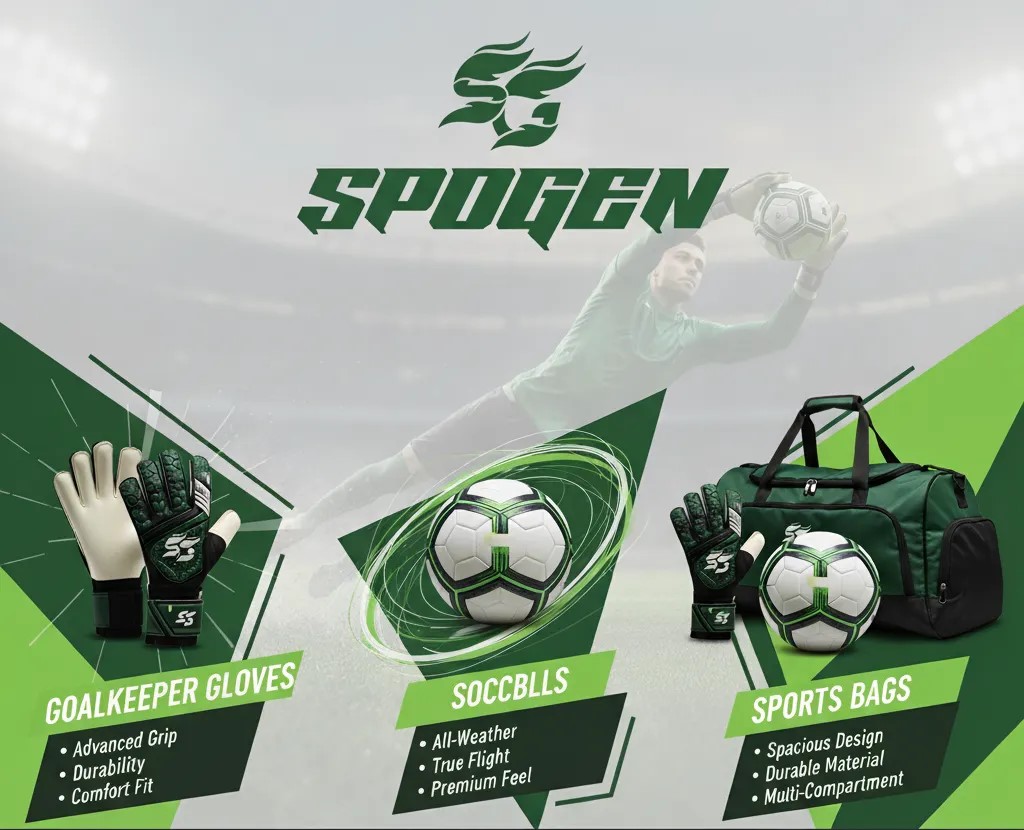
Spogen (PVT)LTD is a B2B sports goods manufacturer from Sialkot, Pakistan. The company makes goalkeeper gloves, soccer balls, sports apparel, sports bags and team uniforms. SpoGen works with wholesale buyers, importers, distributors, retailers, sports academies, clubs and private-label brands.
It offers OEM manufacturing, private label, customization, ODM services, and wholesale and bulk production. SpoGen is listed as BSCI, ISO 9001:2015 and ISO 14001:2015 certified. You can find Spogen at Hall 5, Booth 5B41.
You can ask SpoGen the same questions you would ask any supplier:
- Can you provide your current company profile?
- Which certifications can you share, and can I see current copies?
- What product specifications are available for my product?
- What is the MOQ for this product?
[VERIFY WITH SPOGEN] - What is your sample process, cost and timeline?
[VERIFY WITH SPOGEN] - What customization options are available?
- What is the production lead time for my order size?
[VERIFY WITH SPOGEN] - What quality-control information can you provide?
- What packaging options are available?
- What will the quotation include?
Explore Spogen’s product ranges on the SpoGen https://sports-gen.com/shop/website,
Planning to discuss your next sports product at ISPO 2026? Talk to SpoGen about OEM, private-label and custom sports goods or request a quote or sample.
Red Flags to Watch for When a Manufacturer Cannot Provide Basic Information
Be careful if a supplier:
- Refuses to share a company name or factory address
- Cannot show current certificates but says they have them
- Gives a price with no written quotation
- Avoids questions about MOQ or lead time
- Cannot explain how quality is checked
- Uses different company names on different papers
- Pushes you to pay in full before samples
- Answers “yes” to everything without details
One red flag is not always a dealbreaker. Ask a follow-up question first. But several together are a sign to slow down.
Questions to Ask a Sports Goods Manufacturer at ISPO 2026
Business: Are you a factory or a trading company? Where will my order be made?
Product: Can I see the spec sheet? What materials do you recommend for my price target?
Quality: What happens if a batch has defects?
Samples: How many revisions are included?
Production: What is your busy season? When should I place my order?
Price: What is not included in this price?
Shipping: Which Incoterm is this quote based on?
Branding: Who owns the artwork, molds, and designs?
Final Checklist Before Moving From Meeting to Sample or Bulk Order
- ✅ I have the company profile and factory address
- ✅ I have seen current copies of the certifications I care about
- ✅ I have the spec sheet for my product
- ✅ I understand the QC steps
- ✅ I know the sample cost, time, and revision rules
- ✅ I have the MOQ and lead time in writing
- ✅ I have a written quotation with Incoterms and payment terms
- ✅ I have confirmed packaging and shipping steps
- ✅ I have agreed on branding and artwork approval
- ✅ I have compared at least two suppliers on the same points
Conclusion
At ISPO 2026, the best question is not “How cheap is your product?” It is “Can you show me?” Ask for documents, compare answers, and keep everything in writing. A supplier who shares clear information is easier to trust and easier to work with.
If you are planning to source goalkeeper gloves, soccer balls, sports apparel, sports bags or other custom sports products, you can discuss your requirements with Spogen, a B2B sports goods manufacturer in Sialkot, Pakistan. Request a free B2B quote, discuss your product requirements or book a meeting with Spogen at ISPO 2026.