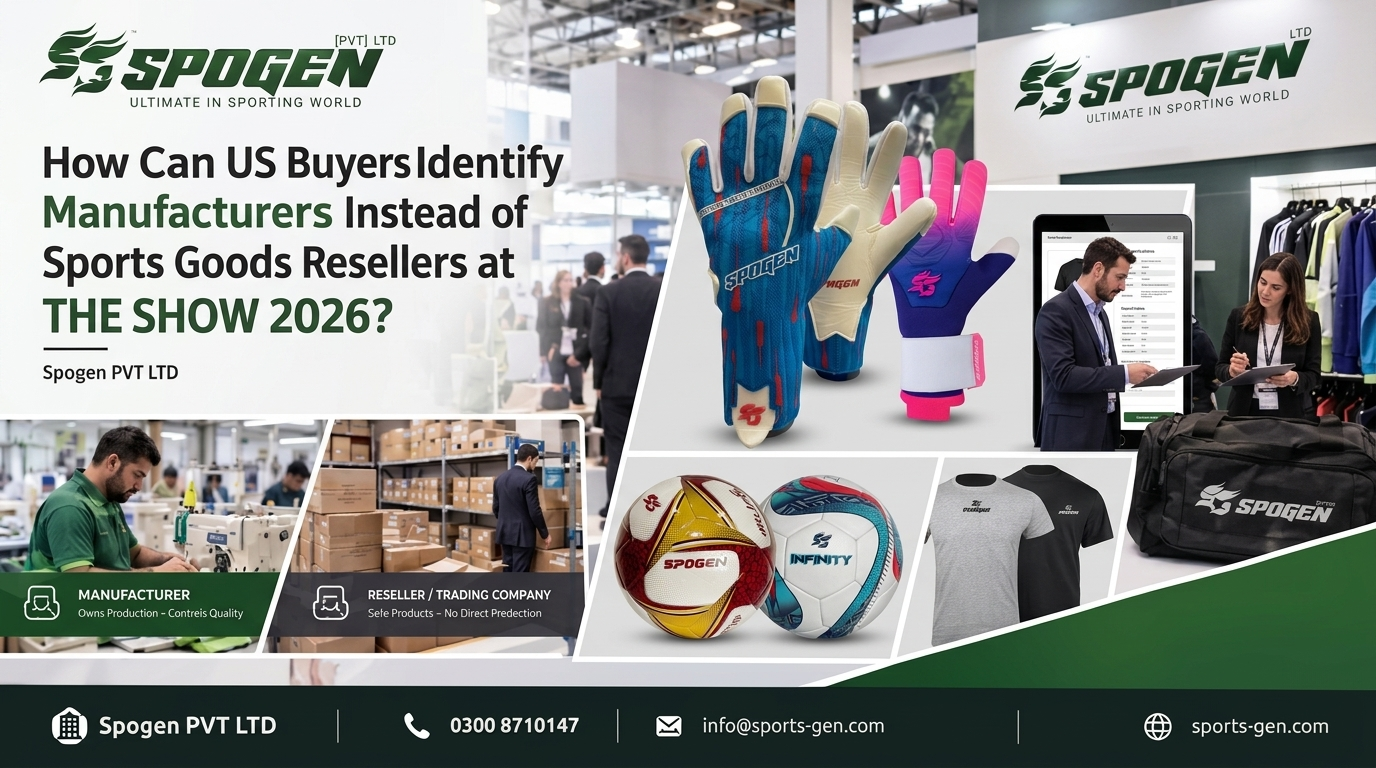
How Can US Buyers Identify Manufacturers Instead of Sports Goods Resellers at ISPO 2026?
A B2B sports goods manufacturer at ISPO 2026 can be difficult to identify from a booth alone. At ISPO 2026, hundreds of companies will stand behind booths with polished banners, sample products and confident sales talk. Some of them design and produce the goods themselves. Others buy finished products from a factory and sell them under a different label. From the booth alone, the two can look identical.
For a US sports brand, club, academy, wholesaler or retailer planning a long-term supply relationship, that difference matters. A manufacturer controls its own production, quality and lead times. A reseller or trading company depends on a third-party factory that the buyer may never see or verify directly. This guide gives US B2B buyers a practical framework for telling the two apart before committing to a sample order, a private-label run or a bulk purchase.
How Can US Buyers Tell a Manufacturer from a Reseller?
A genuine sports goods manufacturer can describe its own production processes in specific detail cutting, stitching, printing, molding or assembly and explain clearly what is done in-house versus by an approved subcontractor. It can also speak from direct experience about product development, sampling, MOQ and quality control. A reseller or trading company usually answers these same questions in general terms, redirects to “our factory partner” or cannot explain the process at all.
Manufacturer vs. Reseller: What Is the Difference?
These terms get used loosely at trade shows, so it helps to define them clearly before ISPO 2026.
| Business type | What it actually does |
|---|---|
| Manufacturer | Owns or directly operates production facilities; controls materials, processes and quality from raw input to finished product |
| Reseller | Buys finished goods from a manufacturer and sells them under its own name, with no production involvement |
| Trading company | Sources products from one or more factories on behalf of buyers, usually without owning production capacity |
| Sourcing agent | Acts as a middleman who identifies and coordinates with manufacturers, typically charging a service fee or margin |
| Distributor | Holds inventory from a manufacturer and resells it in a specific market or territory, without producing anything |
None of these business models are dishonest by definition. Trading companies and sourcing agents can be useful for buyers who need flexibility across multiple product types. The problem is when a reseller presents itself as a manufacturer to appear more credible because that changes what a buyer can reasonably expect in terms of pricing control, customization, quality accountability and long-term reliability.
Why Supplier Verification Matters for US B2B Buyers?
A private-label program, a custom teamwear order or a bulk purchase agreement is a long-term commitment, not a one-time transaction. If the company a buyer is actually working with is a reseller rather than a manufacturer, several things change:
- Customization requests may need to be relayed to a third party, slowing down decisions
- Pricing may include an extra margin layer that isn’t visible to the buyer
- Quality issues may be harder to trace and resolve
- Production timelines may depend on a factory relationship the buyer has no direct insight into
None of this means every reseller is a poor choice. It means buyers should know exactly who they are dealing with before they build a sourcing relationship around it.
Ask What the Company Actually Manufactures
Start with a direct, product-level question: “Which of these specific products do you manufacture yourselves?” A genuine sports goods manufacturer will usually answer with the exact product categories it produces for example, goalkeeper gloves, soccer balls, sports apparel or sports bags rather than a broad claim of “we make everything.”
Watch for the difference between “we manufacture this” and “we can get this for you.” The second phrase is a signal worth following up on, since it often means the company is sourcing rather than producing.
Ask Detailed Questions About Production
Once a company confirms what it manufactures, ask how the product is actually made. Useful questions include:
- How is the product developed, from concept to finished item?
- Where is the material sourced and what materials are used?
- Is cutting, stitching and assembly done in-house?
- Is printing, embroidery or molding handled directly or outsourced?
- What does the finishing and packaging process look like?
- What quality checks happen before the product ships?
A manufacturer should be able to walk through this sequence without hesitation. It’s worth noting that many legitimate manufacturers use approved subcontractors for specific processes for example, a specialized printing or molding step. That alone doesn’t disqualify a company as a manufacturer. What matters is that they can clearly explain what is done in-house and what isn’t, rather than being vague about the entire process.
Check Product Development and Sampling Capabilities
Product development capability is one of the clearest signals of real manufacturing capacity. Ask whether the company can:
- Develop a sample based on a buyer’s own design or specification
- Create or adjust a pattern for apparel or a glove cut
- Offer material or component options during development
- Explain how long sample development typically takes
- Describe how samples are tested before approval
A company that manufactures its own products can usually speak to this process in specific, practical terms. A reseller may need to check with a third party before answering or may only be able to offer existing catalog samples rather than a custom development process.
Test Their Customization and Private-Label Knowledge
For buyers considering private-label or OEM/ODM production, customization knowledge is a strong verification point. Ask about:
- Custom design development and how revisions are handled
- Material and colorway options
- Logo, label and hangtag application methods
- Private-label packaging requirements
- How product specifications are documented and confirmed before production
A manufacturer with real private-label experience will ask specific, practical follow-up questions in return about intended use, target market or quantity rather than giving a generic “yes, we can do private label” answer with no further detail.
Ask About MOQ, Production and Repeat Orders
Minimum order quantity, production scheduling and repeat-order capability are practical questions every B2B buyer should ask directly at ISPO 2026. Rather than accepting a general answer, ask:
- What is your MOQ for this specific product and customization level?
- What does your sample-to-bulk order timeline typically look like?
- How do you handle repeat orders and consistency across batches?
- What packaging options are available for this product?
Specific MOQ figures, lead times and pricing vary by product, material, and customization, so this article does not state fixed numbers for any company, including Spogen. Buyers should treat a supplier’s willingness to give a clear, specific answer rather than a vague range as part of the verification process itself.
Ask How Quality Control Is Managed
Quality control questions reveal a lot about whether a company actually runs production. Ask how the supplier manages:
- Incoming material inspection
- In-process checks during cutting, stitching, or assembly
- Final inspection before packaging and shipment
- How defects are identified and handled
- What quality documentation is available on request
A manufacturer should be able to describe checkpoints at different stages of production. A supplier that only mentions a general “quality guarantee” without explaining how it’s checked is worth further questioning.
Verify Company, Factory and Certification Information
Don’t rely on a sales conversation alone. Independently check:
- The company website and whether it shows real product detail rather than only marketing copy
- The stated manufacturing location and whether it matches industry clusters known for that product category
- Business registration or basic company information where available
- Certifications and whether they can be verified through the certifying body rather than taken on the company’s word alone
- Company history and, where available, references or existing business relationships
Certifications such as ISO or BSCI carry real weight, but only when they can be confirmed. A booth banner showing a certification logo is not the same as a verifiable, current certificate.
Compare Suppliers Beyond Price
A very low quotation, by itself, doesn’t tell a buyer whether a supplier actually manufactures the product or whether corners are being cut elsewhere. Compare across these factors instead of price alone:
| Comparison factor | What to look for |
|---|---|
| Product specifications | Do materials and construction match what was requested? |
| Customization | Can they execute your specific design, not just a similar one? |
| MOQ | Does it fit your order size and testing needs? |
| Quality control | Are inspection stages clearly explained? |
| Sampling process | Is development collaborative or take-it-or-leave-it? |
| Production process | Can they explain who does what and where? |
| Communication | Are answers specific or generic and delayed? |
| Documentation | Will they provide specs, certificates or references on request? |
| Delivery terms | Are timelines and shipping terms clearly stated? |
A supplier that scores well across these factors, even at a slightly higher price, is often a safer long-term partner than the lowest bidder.
Questions US Buyers Should Ask at ISPO 2026
A short, direct checklist to bring to any booth meeting:
- Which sports products do you manufacture directly?
- Where are your products manufactured?
- Which production processes are handled by your own company?
- Can you develop custom products from our design or specification?
- Can you produce private-label products for our brand?
- What does your sample-development process look like?
- What information do you need from us to prepare a quotation?
- What are your MOQ requirements for this product?
- How do you control product quality during production?
- Can you provide company or certification information we can verify?
- What happens after this meeting what’s the next step?
Asking these questions doesn’t automatically prove a company is a manufacturer. It gives buyers a consistent basis for comparison and a reason to ask follow-up questions when an answer feels incomplete.
Red Flags That May Require Further Supplier Verification
Treat these as prompts for more questions, not automatic disqualifiers:
- Vague or shifting answers about where the product is actually made
- Inability to describe any part of the production process specifically
- No willingness to share verifiable certification or company details
- Sample products that don’t match the claimed customization capability
- Reluctance to discuss MOQ, lead time, or the sampling process in any detail
- Pricing that seems unusually low with no clear explanation
How US Buyers Can Follow Up After ISPO 2026
Verification doesn’t end when the show floor closes. After ISPO 2026, buyers can:
- Request a written quotation based on specific product and customization details discussed at the booth
- Ask for product specifications, material information or certification documents in writing
- Request a sample order before committing to bulk production
- Confirm MOQ, lead time and production capacity in writing rather than relying on verbal notes
- Compare written responses from multiple suppliers side by side using the factors above
Why US Buyers Can Speak With SpoGen at ISPO 2026
Spogen Pvt Ltd is a B2B sports goods manufacturer based in Sialkot, Pakistan, a region with a long-established OEM and private label sports goods manufacturing industry. Spogen is BSCI, ISO 9001 and ISO 14001 certified and works with international buyers across the UK, USA, Canada, Europe, Gulf countries, China and South America.
SpoGen’s product categories relevant to US buyers include:
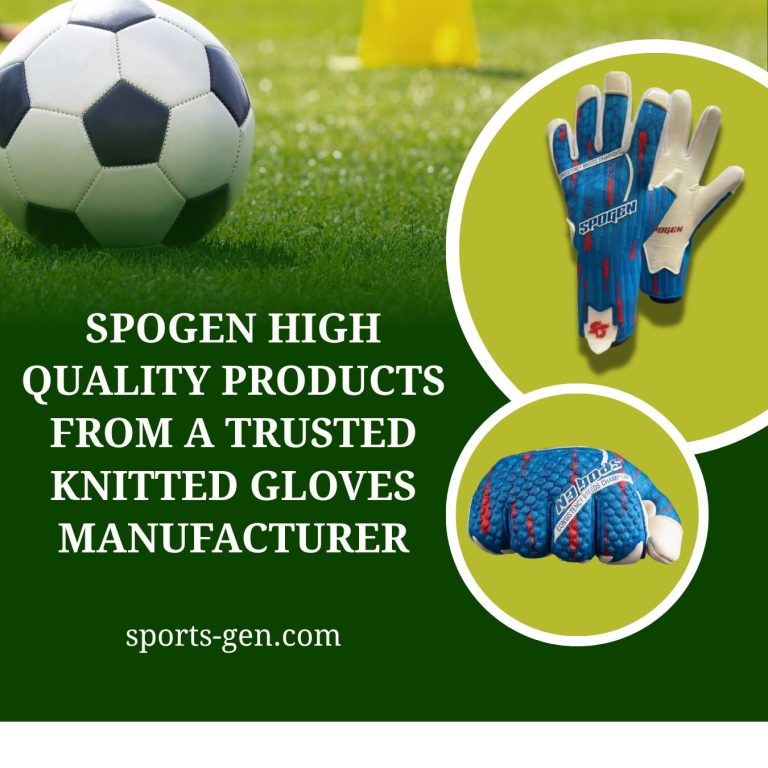
- Custom goalkeeper gloves
- Soccer and football balls
- Sports apparel and custom sportswear
- Sports bags
- Private-label and OEM/ODM sports goods
- Bulk and wholesale sports goods production
SpoGen has exhibited at ISPO in previous years and will be participating again at ISPO 2026, at RAI Amsterdam, with a booth at Hall 5, Booth 5B41. US brands, clubs, academies, wholesalers, retailers and private-label buyers are welcome to visit the booth or arrange a meeting in advance to discuss product requirements, sampling and customization.
As with any supplier, buyers are encouraged to apply the same verification questions covered in this article, including asking about production processes, certifications and sample development, before finalizing any order.
Frequently Asked Questions
Ask specific, product-level questions about production materials, cutting, stitching, printing and quality control. A manufacturer can answer in detail; a reseller typically gives general answers or refers to a third-party factory.
Ask what they manufacture directly, where production happens, which processes are in-house, whether they can develop custom or private-label products and how they manage MOQ, sampling and quality control.
Check the company website and product detail, confirm certifications through the certifying body rather than a claim alone, ask for company or factory information, and compare answers across multiple suppliers rather than relying on one conversation.
A manufacturer owns or directly operates production and controls the process from materials to finished goods. A trading company sources products from one or more factories on behalf of buyers, without owning production capacity itself.
Ask detailed questions about custom design development, material options, labeling and packaging requirements, and how product specifications are documented. A genuine private-label manufacturer will typically ask specific follow-up questions about your requirements in return.
Confirm product specifications, MOQ, sample approval, quality control checkpoints, certifications and delivery terms in writing before committing to a bulk order. Don’t rely on price alone as a deciding factor.
Yes. Many legitimate manufacturers use approved subcontractors for specific processes, such as specialized printing or molding. What matters is that the company can clearly explain which parts of production are handled in-house and which are outsourced.
Request a written quotation and specifications based on what was discussed, ask for verifiable certification documents, request a sample order before bulk production, and compare responses from multiple suppliers’ side by side.
Book a Meeting With SpoGen at ISPO 2026
Planning to meet sports goods manufacturers at ISPO 2026? US brands, sports clubs, academies, wholesalers, retailers, and other B2B buyers can contact SpoGen to discuss product requirements, customization, private-label production and potential sourcing opportunities.