How Do European Sports Clubs Choose a Custom Teamwear Supplier at ISPO 2026?
European sports clubs should look beyond price when choosing a custom teamwear supplier. Product quality, material specifications, customization, samples, MOQ, quality control, communication, certifications, packaging, and delivery planning all matter. ISPO 2026 in Amsterdam gives clubs, academies, teamwear buyers, retailers and sports organizations an opportunity to meet manufacturers directly and compare their capabilities.
For a club planning new football kits, training wear, sports apparel, or a private-label teamwear range, an exhibition meeting can be the first step in a structured supplier evaluation process. The key is to arrive prepared and ask questions that reveal whether a manufacturer can actually meet the project’s requirements.
This guide explains what European sports clubs should check when evaluating a custom teamwear supplier at ISPO 2026 and what they should confirm before requesting samples or moving toward bulk production.
Why ISPO 2026 Matters for European Sports Club Teamwear Sourcing
ISPO 2026 will take place at RAI Amsterdam, Netherlands. The main exhibition dates are November 4–5, 2026, with the Leaders’ Summit on November 3.
For European sports clubs, meeting suppliers directly can make the sourcing process more practical. Instead of evaluating manufacturers only through websites, emails or quotations, buyers can discuss product requirements face-to-face and ask detailed questions about customization, samples, production and order management.
However, meeting a supplier at ISPO does not mean the club should immediately place an order. A better approach is to use the event as a supplier-comparison opportunity:
- Prepare your teamwear requirements before the event.
- Meet relevant manufacturers.
- Ask comparable questions to each supplier.
- Review their answers and capabilities.
- Discuss sample development.
- Confirm specifications in writing.
- Compare the complete sourcing value before making a decision.
The objective is not simply to find the lowest price. It is to identify a manufacturer whose capabilities and processes fit the club’s requirements.
What Should European Sports Clubs Look for in a Custom Teamwear Supplier?
European sports clubs should evaluate a custom teamwear supplier based on product quality, customization, samples, MOQ, quality control, communication, certifications, packaging, delivery planning, and OEM or private-label capabilities.
Each factor can affect the success of a bulk teamwear order.
1. Product Quality and Material Specifications
Start with the product itself.
Ask the manufacturer about the materials, construction, finishing, sizing, and customization options available for the specific teamwear product.
For example, a football club ordering custom apparel may need to discuss:
- Fabric type and specifications
- Colors
- Stitching and finishing
- Logo application
- Printing or embroidery
- Size requirements
- Collar and sleeve details
- Product care requirements
- Packaging
Do not judge a supplier only by the appearance of a sample. Ask whether the agreed specifications can be documented and maintained during bulk production.
Clear specifications reduce the possibility of misunderstandings later.
2. Customization and Design Flexibility
Teamwear represents a club’s identity, so customization is usually an important part of the purchasing decision.
Before selecting a supplier, ask which parts of the product can be customized.
Depending on the product, this may include:
- Club colors
- Logos
- Sponsor placement
- Team names
- Player numbers
- Design elements
- Labels
- Packaging
Bring your artwork or existing kit designs to the ISPO meeting whenever possible.
If the design is not final, ask the manufacturer about the customization options before making design decisions.
For sports businesses developing their own branded product range, private-label capability may also be important.
3. Samples Before Bulk Production
A sample allows a buyer to evaluate the product before committing to a larger order.
This can be particularly useful for customized teamwear because the buyer may need to check materials, sizing, colors, logos, construction, and other specifications.
Before requesting a sample, clarify what the sample should demonstrate.
The buyer can review:
- Material
- Fit
- Size
- Colors
- Logo placement
- Construction
- Finishing
- Custom details
- Packaging, where relevant
Spogen Pvt Ltd can provide samples before bulk production, giving B2B buyers an opportunity to discuss and review requirements before moving forward with a larger order.
Sample approval should be treated as an important part of the sourcing process rather than simply an optional step.
4. MOQ and Production Requirements
MOQ means minimum order quantity. It can influence whether a supplier is suitable for a particular club or sports business.
Buyers should ask about:
- Minimum quantities
- Product-specific requirements
- Size breakdowns
- Color requirements
- Customization requirements
- Packaging requirements
Do not assume that one MOQ applies to every product. Requirements can differ according to the product and customization.
Ask for the MOQ associated with the actual products you plan to purchase.
5. Quality Control and Consistency
A good-looking sample is only one part of supplier evaluation.
Buyers should also understand how the manufacturer manages consistency during bulk production.
Useful questions include:
- How are approved specifications communicated to production?
- How are custom details checked?
- How are defects identified?
- How is product consistency monitored?
- What happens if a production issue is identified?
The exact quality-control process will vary by manufacturer. The buyer’s goal is to understand how the supplier manages the transition from an approved sample or specification to bulk production.
6. Communication and Order Management
Communication becomes especially important when a product is customized.
A supplier should be able to understand the buyer’s requirements and communicate clearly about samples, specifications, changes, approvals and production requirements.
Consider asking:
- How are product specifications documented?
- How are design changes handled?
- How are approvals communicated?
- Who coordinates the order?
- How are questions handled during production?
Clear communication cannot replace product quality, but poor communication can create avoidable sourcing problems.
7. Certifications and Responsible Manufacturing
Certifications can be useful during supplier evaluation, but buyers should understand what each certification means and whether it is relevant to their procurement requirements.
Do not treat a certification as the only proof of supplier suitability. It should be considered alongside product specifications, samples, manufacturing discussions, documentation, and quality processes.
Spogen’s stated certifications include BSCI, ISO 9001, and ISO 14001.
European buyers should verify the certification information and documentation relevant to their own procurement requirements before making a final supplier decision.
8. Packaging, Shipping, and Delivery Planning
Teamwear sourcing does not end with production.
Clubs should discuss:
- Individual product packaging
- Size or style identification
- Carton requirements
- Branding requirements
- Shipping arrangements
- Required delivery date
- Order documentation
- Destination requirements
If the products are required for a particular season, tournament, or team launch, communicate the target date early.
Rather than relying on a general delivery statement, ask the manufacturer to discuss the requirements of the specific order.
9. OEM, ODM, and Private-Label Capabilities
Different buyers require different manufacturing models.
OEM generally involves manufacturing according to the buyer’s specifications or design.
ODM can involve adapting or customizing an existing product design.
Private-label manufacturing involves producing products under the buyer’s own brand.
A football club may need custom teamwear, while a sports retailer may need a private-label collection. A procurement team should therefore explain its requirements clearly before selecting the manufacturing model.
Spogen offers OEM manufacturing, ODM services, private-label manufacturing, customization, wholesale, and bulk production.
Questions European Sports Clubs Should Ask Teamwear Suppliers at ISPO 2026
A prepared question list can make an ISPO meeting much more useful.
European sports clubs should consider asking:
- What custom teamwear products can you manufacture?
- Which product specifications can be customized?
- What materials are available for our requirements?
- Can we approve a sample before bulk production?
- What information do you need to develop a sample?
- What is the MOQ for our specific product?
- How are custom specifications managed during bulk production?
- How is product quality checked?
- Which certifications can you provide for supplier evaluation?
- Can you support OEM, ODM, or private-label requirements?
- What packaging options can we discuss?
- How are design changes and approvals managed?
- What information do you need to prepare a quotation?
- What should we confirm before approving bulk production?
- Can you support multiple sports product categories?
The last question can be particularly useful for buyers who need teamwear alongside other sports goods.
How Can Clubs Compare Two Custom Teamwear Suppliers?
When two manufacturers appear suitable, compare them using the same criteria.
Do not compare one supplier mainly on price and another mainly on quality. Use a consistent framework.
| Supplier Factor | What the Club Should Check | Why It Matters |
|---|---|---|
| Product Quality | Materials, construction, stitching, finishing | Supports consistent quality |
| Customization | Colors, logos, designs, labels | Matches club identity |
| Samples | Sample development and approval | Reduces bulk-order risk |
| MOQ | Minimum order requirements | Fits purchasing needs |
| Communication | Specification clarity and responsiveness | Reduces misunderstandings |
| Quality Control | Production checking processes | Supports consistency |
| Certifications | Relevant certification information | Supports supplier evaluation |
| Production Capability | Suitability for required products/orders | Helps assess supplier fit |
| Packaging | Product and shipping packaging | Supports organized delivery |
| Shipping | Delivery and destination planning | Helps manage deadlines |
| Pricing/Value | Price compared with complete offer | Avoids price-only decisions |
| Long-Term Suitability | Overall supplier fit | Supports future sourcing |
This framework is not intended to produce an artificial score. Its purpose is to help buyers ask consistent questions and make better comparisons.
What Should Buyers Bring to an ISPO 2026 Teamwear Meeting?
Preparation can significantly improve a supplier meeting.
Product and Team Requirements
Bring:
- Required product categories
- Expected quantities
- Size requirements
- Material preferences
- Product specifications
- Target delivery date
Design Information
Prepare:
- Club logo files
- Existing kit designs
- Color references
- Sponsor placement requirements
- Player-number requirements
- Artwork files
Commercial Requirements
Where applicable, prepare information about:
- Expected order quantity
- Shipping destination
- Packaging requirements
- Private-label requirements
- MOQ expectations
- Sample requirements
Questions for the Supplier
Have your questions ready about:
- Sample development
- Customization
- Quality control
- Certifications
- OEM/ODM
- Private label
- Bulk production
- Packaging
- Shipping
The more clearly a club explains its requirements, the easier it becomes for a manufacturer to determine whether the project is suitable.
Why European Sports Clubs Should Evaluate More Than Price
Price is important in B2B sourcing, but it should not be the only selection factor.
A teamwear order involves several connected factors. If specifications are misunderstood, customization is incorrect, or communication is poor, a low initial price may not provide the best overall value.
Instead, consider:
Product quality + customization + sample approval + communication + quality control + MOQ + packaging + shipping planning + overall value.
For example, if two suppliers offer similar prices, the supplier that provides clearer information about specifications, samples, quality processes, and order requirements may be easier to evaluate and manage.
This does not automatically make one supplier better than the other. It simply gives the buyer more information for making a responsible decision.
How Spogen Supports B2B Custom Sportswear and Teamwear Sourcing
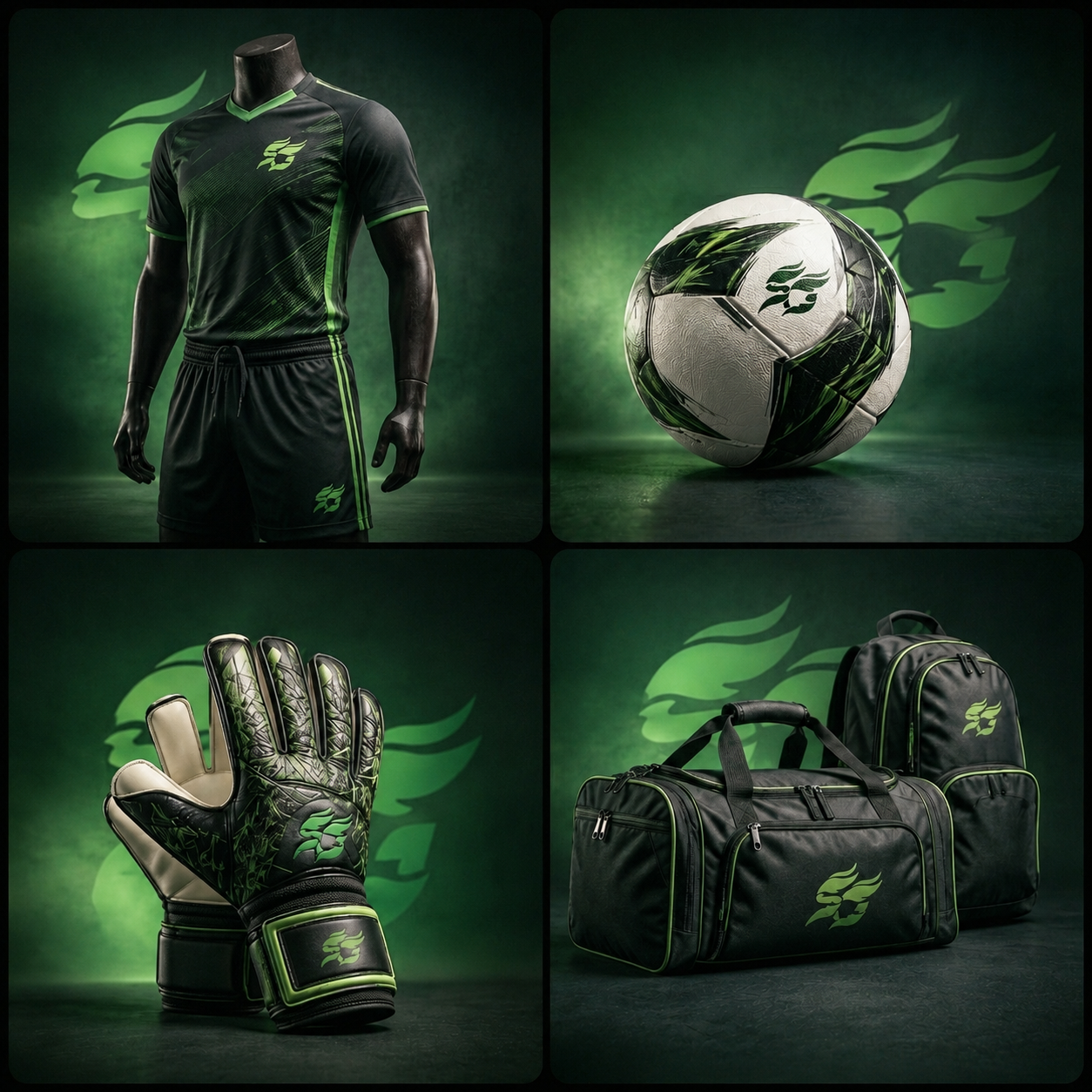
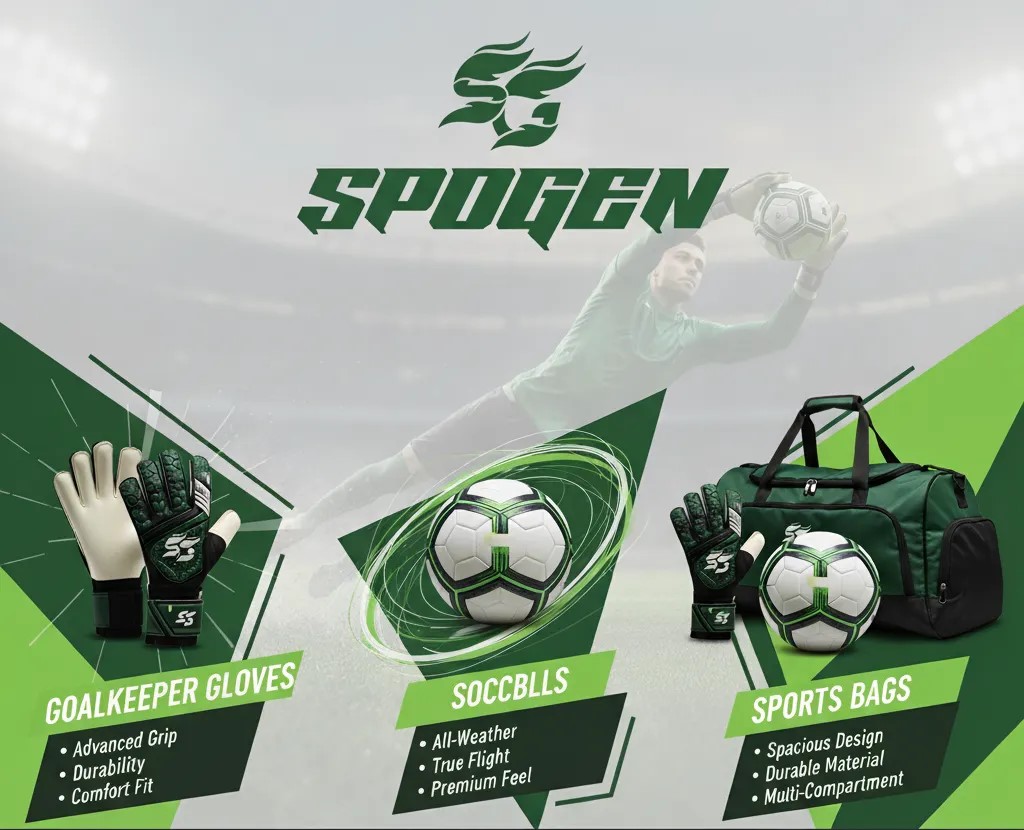
Spogen Pvt Ltd is a B2B sports goods manufacturer based in Sialkot, Pakistan.
Its relevant B2B product range includes:
- Custom teamwear
- Sports apparel
- Soccer balls
- Goalkeeper gloves
- Sports bags
- Football accessories
- Custom sports products
Its stated services include:
- OEM manufacturing
- Private-label manufacturing
- Customization
- ODM services
- Wholesale
- Bulk production
Spogen can provide samples before bulk production. Its stated certifications include BSCI, ISO 9001 and ISO 14001. As with any supplier, buyers should discuss their exact specifications, quantities, customization, sample requirements, packaging and other commercial conditions directly before placing an order.
Meet Spogen at ISPO 2026 Amsterdam
Spogen will be exhibiting at:
ISPO 2026
RAI Amsterdam, Netherlands
November 4–5, 2026
Hall 5, Booth 5B41
Potential B2B buyers can use the meeting to discuss:
- Custom teamwear
- Sports apparel
- Soccer balls
- Goalkeeper gloves
- Sports bags
- Football accessories
- OEM manufacturing
- ODM requirements
- Private-label products
- Customization
- Samples
- Bulk production requirements
If your club, academy, retail business, or sports organization is planning a new teamwear range, prepare your product requirements before the event.
Instead of using the meeting only for a general introduction, bring your specifications and questions so the discussion can focus on whether the supplier fits your project.
Planning to attend ISPO 2026? Discuss your requirements with Spogen and arrange a meeting at Hall 5, Booth 5B41.
Final Checklist for Choosing a Teamwear Supplier at ISPO 2026
Before selecting a manufacturer, check:
- Product specifications
- Material requirements
- Customization options
- Logo and artwork requirements
- Size requirements
- Sample approval
- MOQ
- Bulk production requirements
- Quality-control approach
- Relevant certifications
- Communication process
- Packaging
- Shipping requirements
- Target delivery date
- OEM/ODM/private-label capabilities
- Overall value
- Long-term supplier suitability
A structured checklist helps buyers make a decision based on evidence rather than a quick impression from an exhibition meeting.
Frequently Asked Questions
How do European sports clubs choose a teamwear supplier?
European sports clubs should compare product quality, customization, samples, MOQ, quality control, communication, certifications, packaging, shipping planning, and overall commercial value. Price should be considered as part of the complete sourcing evaluation.
What should clubs ask a custom teamwear manufacturer at ISPO 2026?
Clubs should ask about product specifications, materials, customization, sample development, MOQ, quality control, certifications, production requirements, packaging, shipping, and OEM or private-label capabilities.
Why should sports clubs request samples before bulk production?
Samples allow buyers to review important product details before committing to bulk production. Depending on the product, this can include materials, fit, colors, logos, construction, finishing, and other agreed specifications.
What should clubs compare besides teamwear price?
Buyers should compare quality, customization, samples, MOQ, communication, quality control, certifications, production suitability, packaging, shipping planning, and the supplier’s overall fit with the project.
How can a sports club compare two teamwear manufacturers?
Use the same evaluation criteria for both suppliers. Compare product specifications, customization, sample processes, MOQ, communication, quality control, certifications, production requirements, packaging, shipping, pricing, and long-term suitability.
What should buyers bring to an ISPO 2026 supplier meeting?
Bring product requirements, logo files, designs, colors, sizes, expected quantities, material preferences, packaging requirements, target delivery dates, and a prepared list of questions.
What is the difference between OEM, ODM, and private-label teamwear?
OEM generally involves manufacturing according to the buyer’s specifications or design. ODM can involve adapting an existing product design. Private-label manufacturing involves producing products under the buyer’s brand.
Is Spogen a custom teamwear manufacturer?
Spogen Pvt Ltd is a B2B sports goods manufacturer based in Sialkot, Pakistan. Its product and service offering includes custom sports apparel/teamwear, OEM manufacturing, ODM services, private-label manufacturing, customization, wholesale, and bulk production.
Conclusion
Choosing a custom teamwear supplier at ISPO 2026 should be a structured B2B sourcing decision rather than a price-only comparison.
European sports clubs should evaluate quality, materials, customization, samples, MOQ, quality control, communication, certifications, packaging, shipping planning, and long-term suitability before moving toward bulk production.
ISPO 2026 provides an opportunity to discuss these requirements directly with manufacturers at RAI Amsterdam. Buyers who prepare their product specifications and questions in advance can make supplier meetings more productive and easier to compare.
For clubs, academies, retailers, sports organizations, and private-label buyers considering custom teamwear or other sports goods, Spogen will be at Hall 5, Booth 5B41 on November 4–5, 2026.
If you plan to attend ISPO 2026, prepare your requirements before the event and arrange a discussion with Spogen to explore whether its B2B manufacturing capabilities fit your project.