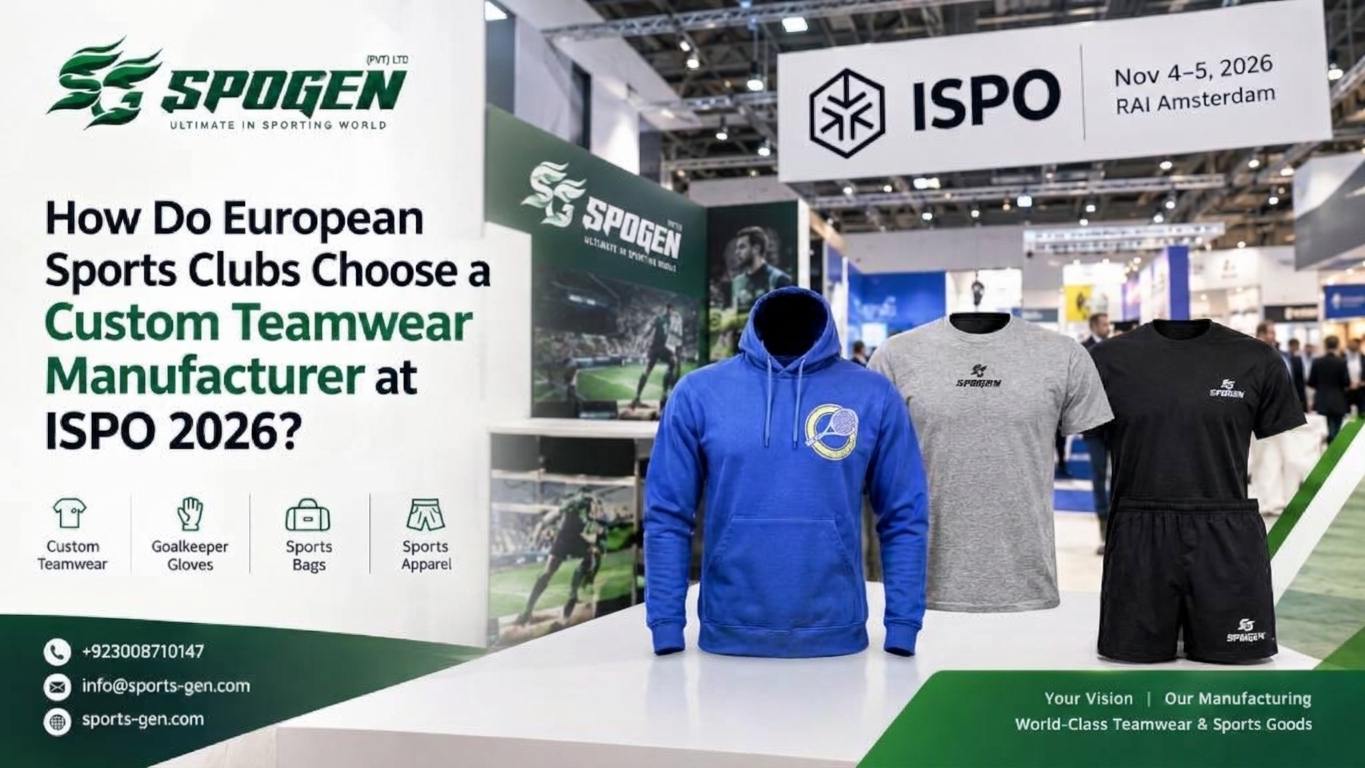
How Do European Sports Clubs Choose a Custom Teamwear Manufacturer at ISPO 2026?
European sports clubs need more than an affordable supplier when sourcing custom teamwear. They need a manufacturing partner that understands their product requirements, offers suitable customization options, provides samples before bulk production, and can manage quality, communication and delivery requirements.
For football clubs, academies, sports organizations and retailers, choosing the right custom teamwear manufacturer can make a significant difference to the final product and purchasing experience. ISPO 2026 in Amsterdam offers an opportunity to meet sports goods manufacturers, discuss product requirements and explore B2B manufacturing partnerships directly.
If you are planning to source custom football kits, training wear, sports apparel or private label teamwear, this guide explains what to check before selecting a manufacturer.
Why Is ISPO 2026 Important for European Sports Clubs?
ISPO 2026 will take place at RAI Amsterdam in the Netherlands from November 3–5, 2026. The Leaders’ Summit takes place on November 3, while the main exhibition runs on November 4–5. For European sports clubs, retailers, academies and sports businesses, ISPO provides an opportunity to connect with companies across the international sports industry.
Meeting a manufacturer in person can help buyers discuss:
- Custom teamwear and football kits
- Sports apparel and training clothing
- Fabric and material specifications
- Custom designs and branding
- Sample development
- Minimum order quantities (MOQ)
- OEM and private-label manufacturing
- Production and shipping requirements
Instead of choosing a supplier based only on website information or an initial quotation, buyers can use an exhibition meeting to understand the manufacturer’s capabilities. However, meeting a manufacturer does not mean you should immediately place an order. It is important to compare suppliers and confirm the details of your project first.
Check Product Quality and Fabric Specifications
Product quality should be one of the first things to consider when choosing a custom teamwear manufacturer. For football clubs and sports organizations, teamwear must match the intended use, design and performance requirements.
Ask the manufacturer about:
- Fabric type and composition
- Fabric weight and thickness
- Stitching and construction
- Printing and embroidery options
- Color consistency
- Size measurements and grading
- Collar and sleeve construction
- Finishing and packaging
For example, a club ordering custom football jerseys may need breathable fabric, suitable printing methods and consistent sizing across different age groups. A manufacturer should understand these requirements before starting sample development.
Do not judge a product only by its appearance. Ask whether the agreed material and construction specifications can be documented and followed during bulk production.
Understand Customization and Private-Label Options
Every sports club has its own identity. Team colors, logos, sponsor placements and player numbers are important parts of custom teamwear. Before choosing a supplier, ask which product features can be customized.
Depending on the design, customization may include:
- Club colors and patterns
- Team logos
- Sponsor logos
- Player names and numbers
- Sublimation printing
- Embroidery
- Custom labels and branding
- Packaging
If you already have a design, bring your artwork or technical specifications to the supplier meeting. If your design is not ready, ask the manufacturer about available materials, printing techniques and product development options.
For sports retailers and brands developing their own collections, private-label sportswear manufacturing can also be important. With private-label production, products are manufactured under the buyer’s brand according to the agreed requirements.
Request Samples Before Bulk Teamwear Production
A sample gives buyers an opportunity to review a product before committing to a larger order. This is particularly important for custom football kits and sports apparel because small differences in fabric, fit, printing or construction can affect the finished product.
Before requesting a sample, explain what you want to evaluate.
Check:
- Fabric quality
- Fit and measurements
- Color accuracy
- Logo and sponsor placement
- Stitching
- Printing or embroidery
- Product finishing
- Custom design details
Ask the manufacturer how sample changes and approvals are managed. Once the sample is approved, keep the final specifications as a reference for bulk production.
Spogen Pvt Ltd provides samples before bulk production, allowing B2B buyers to review their product requirements before moving forward with a larger order. Sample costs, development time and shipping arrangements should be confirmed directly for each project.
Ask About MOQ and Bulk Manufacturing Requirements
MOQ stands for Minimum Order Quantity. It is the minimum number of products a manufacturer requires for a particular order. This is an important factor for sports clubs, retailers, wholesalers and private-label businesses.
Before selecting a teamwear supplier, ask:
- What is the minimum order quantity?
- Does MOQ vary by product?
- Are different sizes possible within one order?
- Can different colors or designs be included?
- Are there separate requirements for customized products?
- Does packaging affect the order quantity?
Do not assume that the same MOQ applies to every product. For example, custom football jerseys, tracksuits and sports bags may have different manufacturing requirements. Always request the MOQ for your actual product and customization requirements.
Evaluate Quality Control and Production Consistency
An approved sample is important, but buyers should also understand how product quality is managed during bulk manufacturing. A reliable supplier should be able to explain how agreed specifications are communicated and checked during production.
Consider asking:
- How are product specifications shared with production?
- How are custom designs checked?
- How are stitching and finishing inspected?
- How are product defects identified?
- How is consistency monitored?
- What happens if a production issue is identified?
The objective is to understand how the manufacturer manages the transition from sample approval to bulk production. Ask about the actual quality-control procedures rather than relying on general statements such as high quality or premium manufacturing.
Check Communication and Order Management
Clear communication is important throughout the custom sportswear manufacturing process. A customized teamwear order may involve artwork, fabric selection, size specifications, samples, approvals, packaging and delivery arrangements. Before selecting a manufacturer, understand how these details will be managed.
Useful questions include:
- Who will coordinate the order?
- How are product specifications documented?
- How are design changes communicated?
- How are sample approvals handled?
- How will production updates be shared?
- How are questions or issues addressed?
Good communication helps reduce misunderstandings and makes the purchasing process easier to manage.
Verify Certifications and Manufacturing Information
Certifications can help buyers evaluate a manufacturer’s management systems and business practices. However, buyers should understand what each certification covers and whether it meets their own procurement requirements.
When evaluating a sportswear supplier, ask about:
- Available certifications
- Certification scope
- Validity and expiry dates
- Relevant supporting documents
- Manufacturing and quality-management procedures
Spogen’s stated certifications include BSCI, ISO 9001 and ISO 14001. European buyers should request and verify the relevant documentation before making a supplier decision.
Certifications should be considered alongside product quality, sample approval, manufacturing capabilities and communication.
Discuss Packaging, Shipping and Delivery Planning
A successful teamwear order also depends on packaging and delivery arrangements.
Sports clubs may need products before a new season, tournament, training programme or team launch.
Discuss the following requirements with the manufacturer:
- Individual product packaging
- Size and style identification
- Carton specifications
- Custom labels and branding
- Shipping arrangements
- Delivery destination
- Required delivery date
- Export and order documentation
Share your target delivery date as early as possible.
Ask the supplier to confirm the production and shipping arrangements for your specific order rather than relying on a general delivery estimate.
Understand OEM, ODM and Private-Label Manufacturing
Different sports businesses have different product development requirements. Understanding the manufacturing models can help you choose the right supplier.
OEM (Original Equipment Manufacturing)
OEM manufacturing involves producing products according to the buyer’s specifications, design or approved requirements.
For example, a football club may provide its own teamwear design and request a manufacturer to produce the garments.
ODM (Original Design Manufacturing)
ODM can involve adapting or customizing an existing product design to meet the buyer’s requirements.
For example, a sports brand may select an existing garment style and request changes to its colors, branding or other details.
Private-Label Manufacturing
Private-label manufacturing involves producing products under the buyer’s own brand.
For example, a sports retailer may develop a private-label teamwear collection for its customers.
Spogen offers OEM manufacturing, ODM services, private-label manufacturing, customization, wholesale and bulk production. Before requesting a quotation, explain your preferred manufacturing model and product requirements.
Questions European Sports Clubs Should Ask a Teamwear Manufacturer at ISPO 2026
Preparing questions before an exhibition meeting can help buyers compare manufacturers more effectively.
Here are some useful questions:
- Which custom teamwear products can you manufacture?
- What fabric options are available?
- Can we customize the colors, logos and designs?
- Which printing and embroidery methods do you offer?
- Can we review a sample before bulk production?
- What information do you need to develop a sample?
- What is the MOQ for our required product?
- How do you maintain consistency during bulk production?
- What quality-control procedures do you follow?
- Which certifications and supporting documents can you provide?
- Do you offer OEM, ODM and private-label manufacturing?
- What packaging options are available?
- How are design changes and approvals managed?
- What information do you need to prepare a quotation?
- What production and shipping arrangements should we consider?
These questions can help clubs, academies, retailers and sports organizations understand whether a manufacturer is suitable for their project.
How Can Sports Clubs Compare Two Teamwear Manufacturers?
If two suppliers appear suitable, compare them using the same evaluation criteria.
Do not make a decision based only on the initial quotation.
| Supplier factor | What to check | Why it matters |
|---|---|---|
| Product quality | Fabric, stitching and finishing | Supports product consistency |
| Customization | Logos, colors and designs | Matches club identity |
| Samples | Sample development and approval | Helps review the product |
| MOQ | Minimum order requirements | Fits purchasing needs |
| Quality control | Production checking procedures | Helps manage bulk quality |
| Communication | Specification and approval process | Reduces misunderstandings |
| Certifications | Relevant documentation | Supports supplier evaluation |
| Production | Manufacturing suitability | Matches order requirements |
| Packaging | Product and carton requirements | Supports organized delivery |
| Shipping | Destination and delivery planning | Helps manage deadlines |
| Pricing | Complete quotation and services | Supports fair comparison |
| Long-term suitability | Overall supplier capabilities | Supports future sourcing |
A structured comparison gives buyers a clearer understanding of each supplier’s strengths and limitations.
The best choice is not necessarily the manufacturer with the lowest price. It is the supplier whose capabilities, product quality and commercial conditions match the project.
What Should Buyers Prepare Before Meeting a Manufacturer at ISPO 2026?
A prepared buyer can make better use of an exhibition meeting.
Before visiting a manufacturer, organize the following information.
Product requirements
- Required teamwear products
- Expected order quantities
- Size breakdown
- Material preferences
- Product specifications
- Target delivery date
Design information
- Club logo
- Existing teamwear designs
- Color references
- Sponsor artwork
- Player names and numbers
- Printing and embroidery requirements
Commercial requirements
- Expected order quantity
- MOQ expectations
- Shipping destination
- Packaging requirements
- Private-label requirements
- Sample requirements
Questions for the manufacturer
- Sample development
- Customization options
- Production capabilities
- Quality control
- Certifications
- OEM and ODM services
- Bulk manufacturing
- Shipping arrangements
The more clearly you explain your requirements, the easier it becomes for a manufacturer to understand your project and discuss suitable production options.
Why Choose a B2B Sports Goods Manufacturer Like SpoGen?
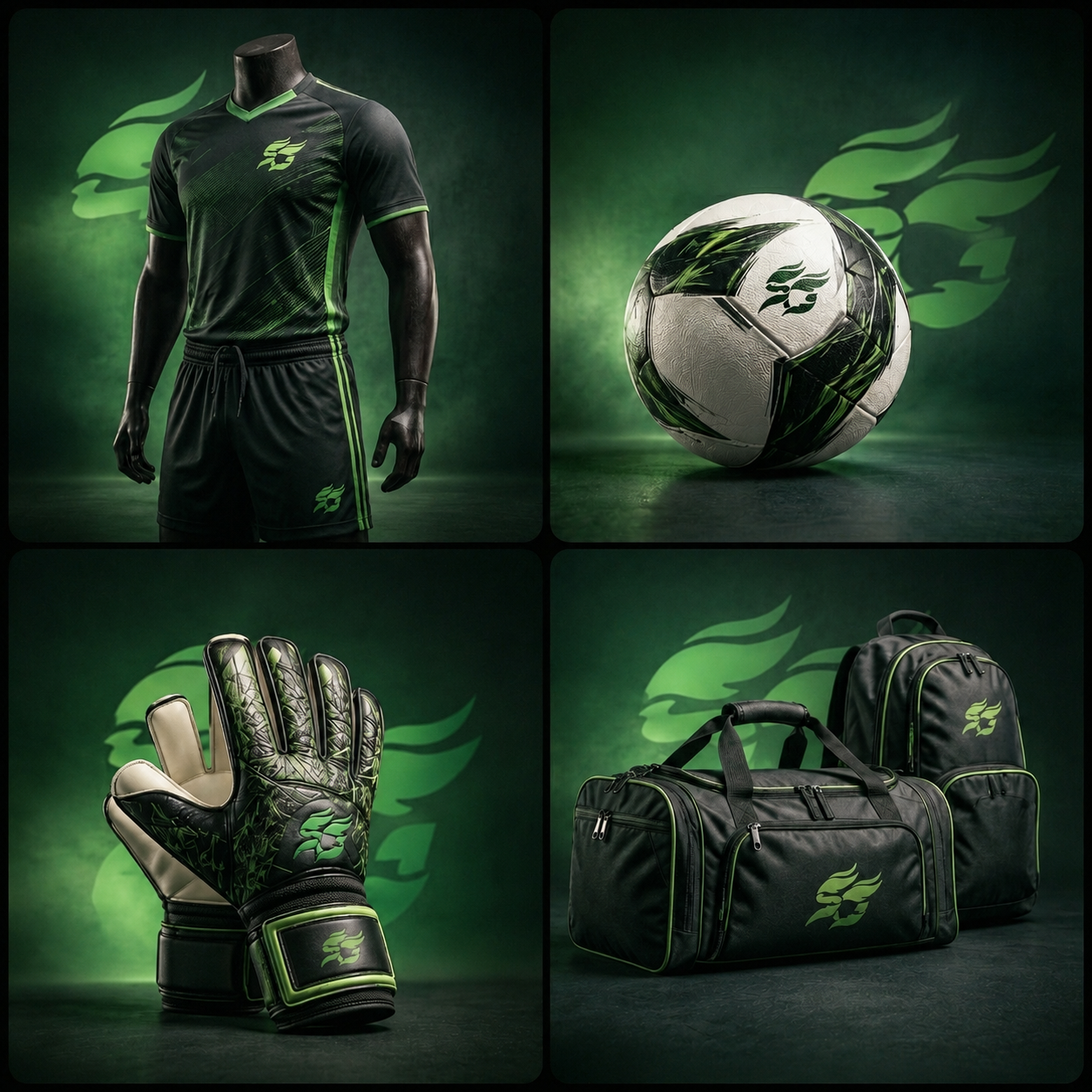
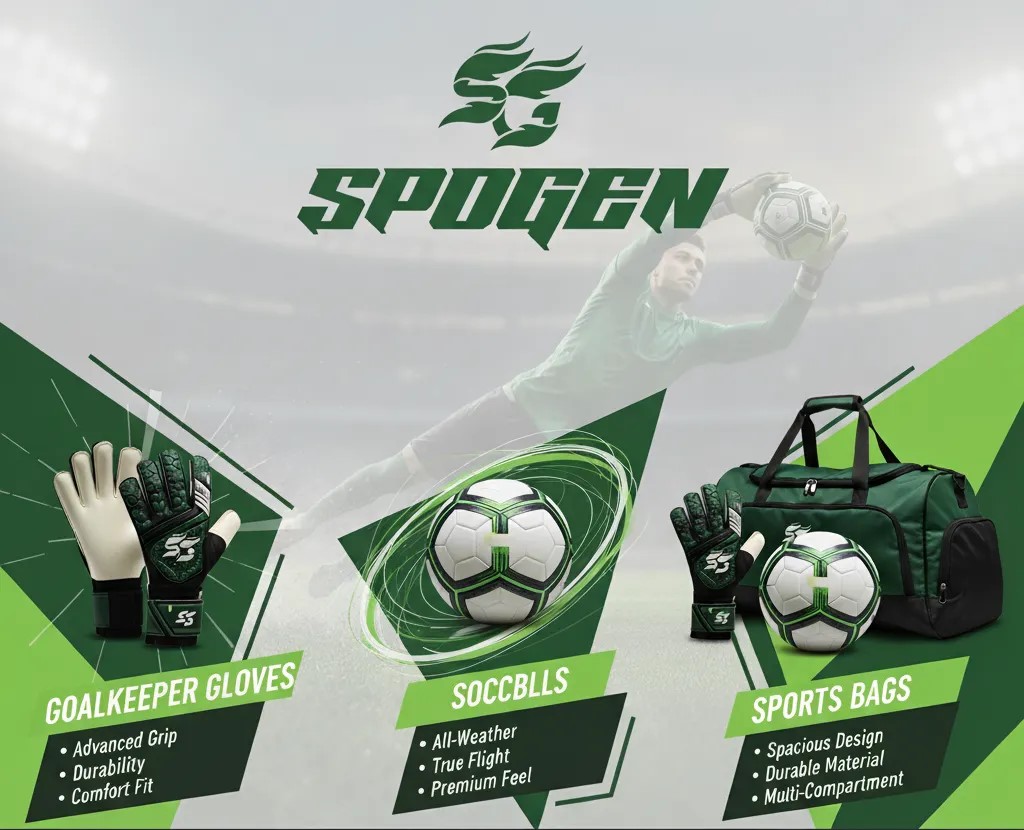
Spogen Pvt Ltd is a B2B sports goods manufacturer based in Sialkot, Pakistan. The company works with sports brands, importers, wholesalers, distributors, retailers, clubs and academies looking for custom sports products and manufacturing services.
Its product range includes:
- Custom sports apparel and teamwear
- Goalkeeper gloves
- Soccer balls
- Sports bags
- Football accessories
- Custom sports products
SpoGen’s manufacturing services include:
- OEM manufacturing
- ODM services
- Private-label manufacturing
- Product customization
- Wholesale supply
- Bulk production
The company also provides samples before bulk production and has stated BSCI, ISO 9001 and ISO 14001 certifications.
For buyers developing a new sports product or expanding an existing collection, discussing the product specifications, customization requirements, sample process and commercial conditions directly with the manufacturer is an important first step.
Explore SpoGen’s custom sportswear manufacturing services to learn more about its apparel and teamwear offering.
Meet Spogen at ISPO 2026 in Amsterdam
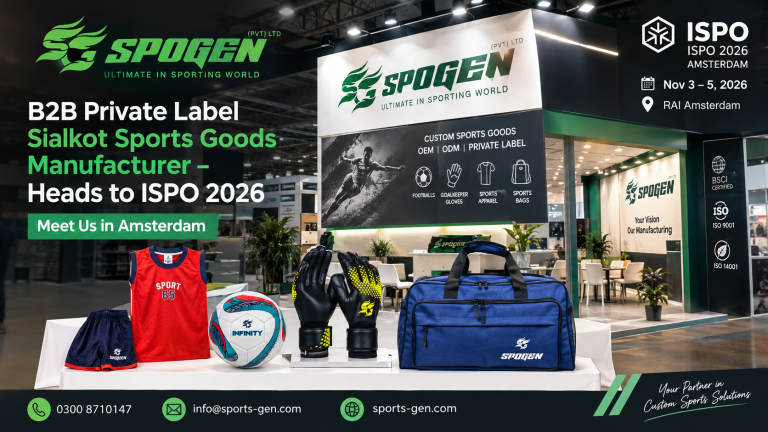
Spogen will be exhibiting at ISPO 2026, providing an opportunity for international B2B buyers to discuss custom sports products and manufacturing requirements.
Exhibition details
- Event: ISPO 2026
- Venue: RAI Amsterdam, Netherlands
- Exhibition dates: November 4–5, 2026
- Hall: 5
- Booth: 5B41
Products to discuss at the meeting
- Custom goalkeeper gloves
- Sports bags
- Sports apparel and teamwear
- Soccer balls
- Football accessories
- Custom sports products
Manufacturing services
- OEM manufacturing
- ODM services
- Private-label production
- Customization
- Sample development
- Wholesale and bulk manufacturing
Whether you represent a football club, sports academy, retailer, distributor or private-label sports brand, you can use the meeting to explain your product requirements and discuss potential manufacturing opportunities.
Bring your designs, specifications, expected quantities and questions to make the discussion more productive.
Planning to attend ISPO 2026?
Meet SpoGen at Hall 5, Booth 5B41, on November 4 or 5.
Book a 15-minute meeting with SpoGen and discuss your next custom sportswear or sports goods project.
Final Checklist: Choosing the Right Custom Teamwear Manufacturer
Before selecting a supplier, make sure you have discussed:
- Product specifications
- Fabric and material requirements
- Customization options
- Logo and artwork placement
- Size requirements
- Sample development and approval
- MOQ and order quantities
- Bulk production requirements
- Quality-control procedures
- Relevant certifications
- Communication and order management
- Packaging requirements
- Shipping arrangements
- Target delivery date
- OEM, ODM and private-label services
- Complete quotation and commercial conditions
Taking time to review these details can help sports clubs make a more informed sourcing decision.
Frequently Asked Questions
How do European sports clubs choose a custom teamwear manufacturer?
European sports clubs should compare product quality, fabric specifications, customization, samples, MOQ, quality control, certifications, communication, packaging and delivery arrangements. They should also check whether the manufacturer can meet their specific product and order requirements.
What should sports clubs ask a teamwear supplier at ISPO 2026?
Ask about fabric options, product customization, sample development, MOQ, bulk production, quality control, certifications, packaging, shipping and private-label manufacturing. Prepare your designs and expected quantities before the meeting.
Why should buyers request samples before bulk production?
Samples allow buyers to review fabric, fit, colors, logos, stitching and other product specifications before placing a larger order. They also provide a reference for approving the final product requirements.
What is the difference between OEM and ODM teamwear manufacturing?
OEM manufacturing generally follows the buyer’s specifications or design. ODM can involve adapting an existing product design to meet the buyer’s requirements. Both models can support customized sportswear projects.
What is private label teamwear manufacturing?
Private-label teamwear manufacturing means producing sports apparel under the buyer’s own brand. Buyers can discuss designs, logos, labels, materials and other agreed product specifications with the manufacturer.
What is MOQ in custom sportswear manufacturing?
MOQ means Minimum Order Quantity. It is the minimum number of products required for an order. The MOQ can differ according to product type, materials, customization and manufacturing requirements.
Can sports clubs order custom football kits in bulk?
Yes. Sports clubs can discuss bulk orders for custom football kits, including jerseys, shorts, training wear and other team apparel. The required quantities, designs, sizes and customization should be confirmed with the manufacturer.
Why do European buyers source sportswear from manufacturers in Sialkot, Pakistan?
Sialkot has an established sports goods manufacturing industry, including goalkeeper gloves, soccer balls, sports apparel and sports accessories. Buyers considering suppliers in the city should evaluate each manufacturer’s product quality, samples, manufacturing capabilities, certifications and commercial terms.
Is Spogen a B2B custom teamwear manufacturer?
Spogen Pvt Ltd is a B2B sports goods manufacturer based in Sialkot, Pakistan. Its product range includes custom sports apparel and teamwear, goalkeeper gloves, soccer balls and sports bags. Its services include OEM, ODM, private-label manufacturing, customization, wholesale and bulk production.
Where can buyers meet Spogen at ISPO 2026?
Buyers can meet Spogen at RAI Amsterdam, Hall 5, Booth 5B41, on November 4–5, 2026. They can discuss custom sports apparel, teamwear, goalkeeper gloves, sports bags, soccer balls and B2B manufacturing requirements.
Conclusion
Choosing a custom teamwear manufacturer at ISPO 2026 should be a structured sourcing decision. European sports clubs, academies, retailers and sports organizations should look beyond price and evaluate product quality, fabric specifications, customization, samples, MOQ, quality control, certifications, communication and delivery planning.
Meeting manufacturers directly at ISPO can help buyers understand their capabilities and discuss product requirements before moving toward sample development and bulk production. Spogen Pvt Ltd will be at Hall 5, Booth 5B41, RAI Amsterdam, on November 4–5, 2026.
Planning a new teamwear collection or bulk sportswear order? Request Your Free B2B Quote and share your product requirements with Spogen and tailored to your project. Discuss your designs, quantities and customization needs with our team before taking the next step.