ISPO 2026: How to Find a Reliable Sports Goods Manufacturer?
Finding the right sports goods manufacturer is not something you decide in one email. You need to see the product, ask hard questions and get a feel for how a factory actually works. That’s exactly what a trade show is for.
ISPO 2026 gives B2B buyers a rare chance to do all of this in one place. This guide walks through what to check before you commit to a manufacturer and how to use a show like ISPO to do it properly.
What Is ISPO 2026 and Why Does the Move to Amsterdam Matter?
ISPO is one of the biggest trade fairs for the sporting goods, outdoor and winter sports industries. For 25 years it ran in Munich. In 2026, it moves for the first time to RAI Amsterdam, organized by Raccoon Media Group in partnership with Messe München.
The new dates are November 3 to 5, 2026. November 3 is set aside for the ISPO Leaders’ Summit, a conference day focused on topics like sustainability and fair trade. The show floor itself opens on November 4 and runs through November 5. The event is also co-located with the International Running Expo, so buyers get access to both under one roof.
The move matters for a practical reason: the earlier November timing lines up better with global buying cycles and Amsterdam’s Schiphol Airport makes travel easier for buyers coming from North America and Asia, not just Europe. According to RAI Amsterdam’s own announcement, the show is expected to draw well over 50,000 visitors from the global sports industry, though exact final numbers, as with any first-year event in a new city, will only be confirmed after the show.
Why Should B2B Buyers Meet Manufacturers Face-to-Face?
You can learn a lot from a supplier’s website and a few email exchanges. But some things only become clear in person.
Holding a goalkeeper glove and feeling the grip on the palm tells you more than any spec sheet. Watching how a sales rep answers a tough question about MOQ or lead time tells you how they’ll handle a real problem later. And walking a show floor lets you compare three or four manufacturers in the space of an afternoon, instead of waiting days for each one to reply to an email.
There’s also a relationship side to this. Long-term supply deals work better when both sides have actually met. A face-to-face conversation, even a short one at a booth, tends to make follow-up communication faster and more direct.
How Do You Evaluate a ISPO 2026 Sports Goods Manufacturer?
Not every manufacturer at a show is the right fit for your business. Here’s what to actually check, beyond how polished their booth looks.
| What to Check | Why It Matters |
|---|---|
| Physical product samples | Shows real quality, not just what’s printed on a catalogue or spec sheet |
| Certifications and audits (ISO 9001, ISO 14001, BSCI) | Signals the factory follows recognized quality and social compliance standards |
| MOQ flexibility | Determines whether the order size fits your budget and market test |
| Customization options | Confirms whether you can add your own branding, materials or design changes |
| Production capacity | Signals whether they can support repeat orders as your business grows |
| Communication and response speed | A preview of how they’ll handle issues after you’ve already placed an order |
How Can You Judge Product Quality on the Show Floor?
Pick up the product. Check the stitching on a ball panel, the grip texture on a glove palm or the fabric weight on a jersey. Ask what materials are used and where they’re sourced. A manufacturer who can explain their material choices in detail, rather than giving a vague answer, usually knows their production process well.
Why Do Certifications Like ISO and BSCI Matter?
ISO 9001 is a quality management certification. It shows a factory has documented, repeatable processes for making consistent products. ISO 14001 covers environmental management, showing the factory has systems in place to reduce waste and environmental impact.
BSCI, run by amfori, works a little differently. It’s not a pass-or-fail certificate it’s an audit system that rates a factory’s social compliance, covering things like fair wages and safe working conditions, on a scale from A to E. So instead of asking “are you BSCI certified,” a sharper question is: “what was your last BSCI audit rating and when was it done?”
What’s the Difference Between OEM, ODM and Private Label?
These three terms get mixed up constantly and the difference actually matters for your budget and timeline.
| Sourcing Model | Who Designs It | Whose Brand Is On It | Best For |
|---|---|---|---|
| OEM (Original Equipment Manufacturing) | You send your own design or spec sheet | Your brand | Brands with an in-house design team |
| ODM (Original Design Manufacturing) | The factory designs it | Your brand | Brands that want to launch fast without designing from scratch |
| Private Label | Factory’s existing product line | Your brand, with light customization (logo, colors, packaging) | New or smaller brands testing a product line |
What MOQ Should You Expect?
MOQ, changes depending on how much customization you want. A logo added to an existing product usually needs a smaller MOQ than a fully custom design built from new molds or patterns. Don’t assume one number applies across a manufacturer’s whole catalogue ask about the specific product you’re interested in.
How Should You Handle Samples Before a Bulk Order?
Always request a physical sample before committing to a bulk order, even if you’ve seen good photos. Ask about the sample turnaround time and whether the sample cost is later credited toward your first bulk order this is common practice with many manufacturers, though terms vary, so confirm this directly with whoever you’re sourcing from.
Test the sample yourself. For a soccer ball, check the bounce and stitching. For a glove, check the grip and flexibility. For apparel, check the stitching and how it holds up after a wash.
How Do You Know a Supplier Can Handle Long-Term Orders?
Ask how long they’ve been exporting and to which regions. Ask about their production capacity and typical lead times for a reorder, not just a first order. A manufacturer who can talk clearly about their production schedule, rather than giving a rough guess, is usually better set up for long-term partnerships.
A Practical Checklist: Questions to Ask at the Booth
-
- Can I see a physical sample of this exact product, not just a similar one?
-
- What is your MOQ for this product and does it change with customization?
-
- What is your current ISO certification status and can I see the certificate?
-
- What was your last BSCI audit rating and when was it completed?
-
- Do you offer OEM, ODM or private label services or all three?
-
- What is your typical sample lead time and your bulk production lead time?
-
- What regions do you currently export to?
-
- How do you handle quality control before shipping?
Where to Find SPOGEN at ISPO 2026
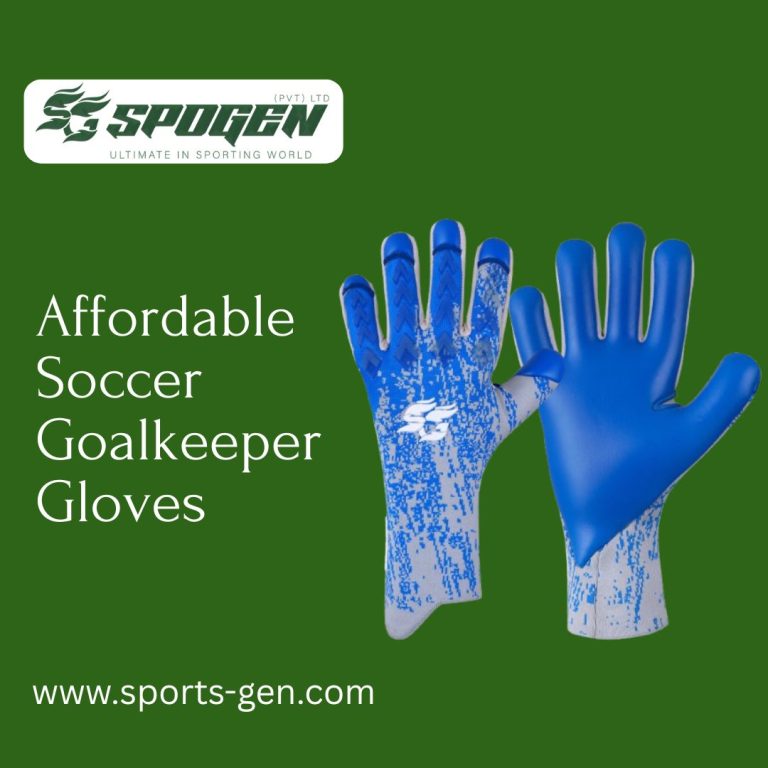
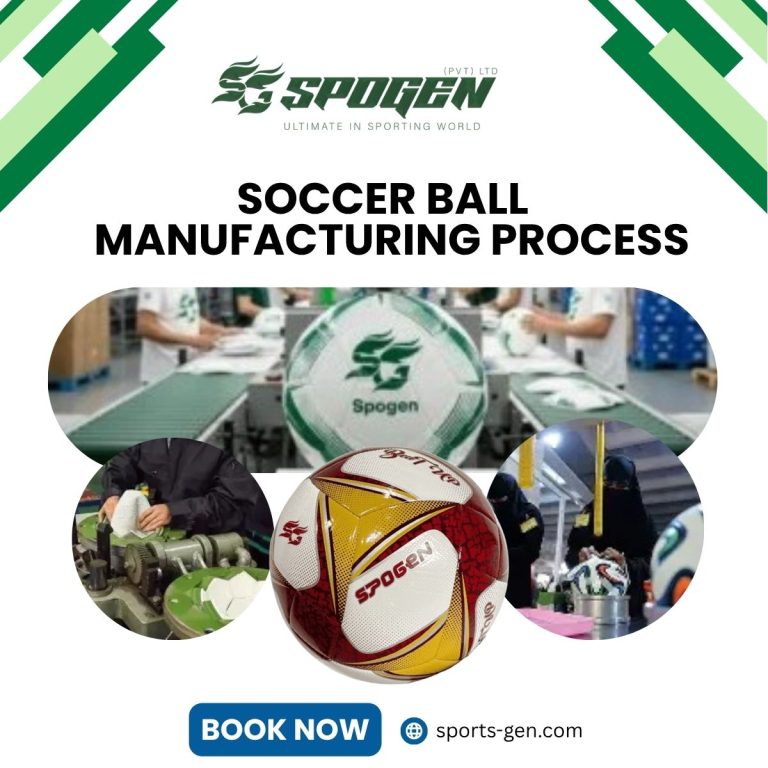
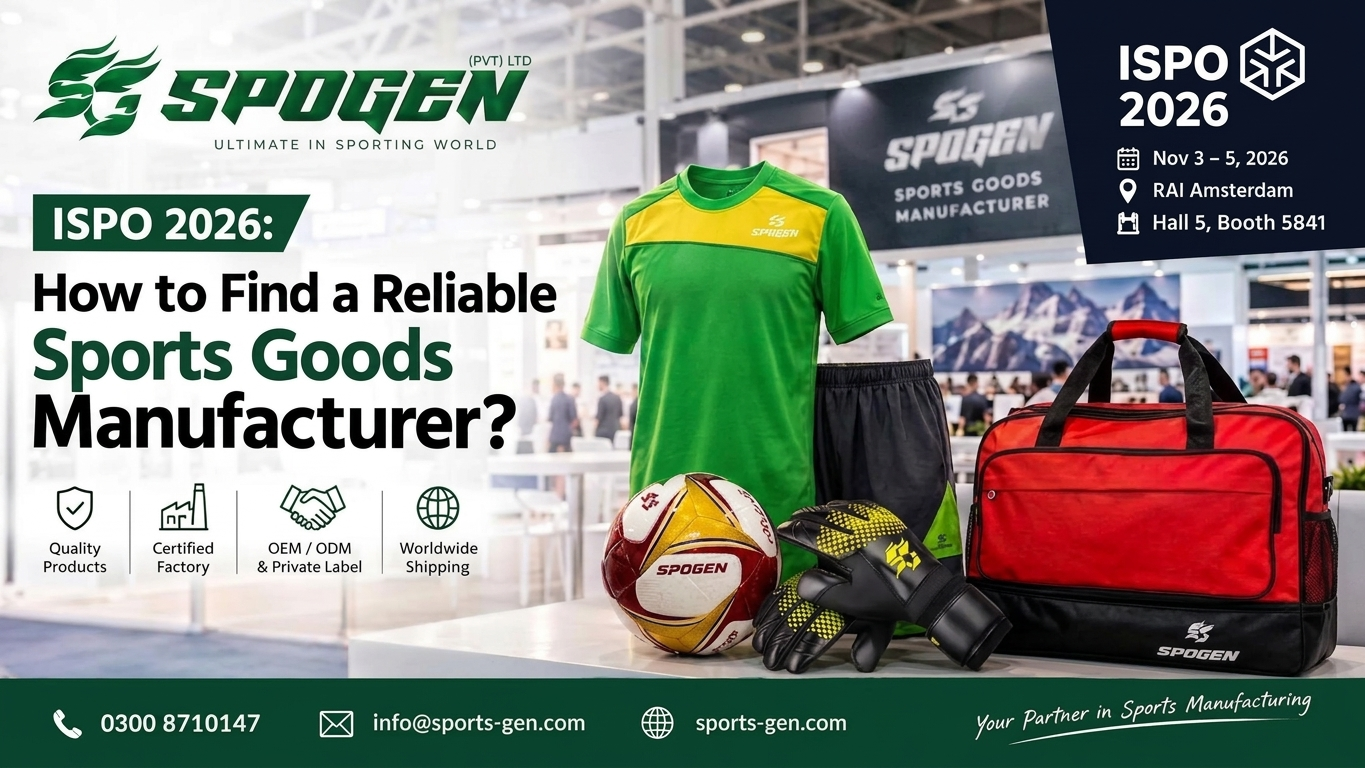
Spogen is a BSCI & ISO certified B2B private label sports goods manufacturer based in Sialkot, Pakistan, working with importers, wholesalers, distributors, retailers, sports academies, clubs and private label brands. The company’s product range covers soccer balls, goalkeeper gloves, sports apparel, sports bags and custom sports products, with OEM manufacturing, ODM services, private label manufacturing, customization, wholesale and bulk production available.
SpoGen has exhibited at ISPO before and plans to exhibit again this November in Hall 5, Booth 5B41 (worth double-checking against ISPO’s official exhibitor directory closer to the show, as floor plans can shift). Buyers who want dedicated time on the show floor can book a meeting in advance through sports-gen.com, rather than relying on a chance walk-by.